
New York City Subway: Complete Guide to OMNY and Getting Around
General Rules, Fares and Etiquette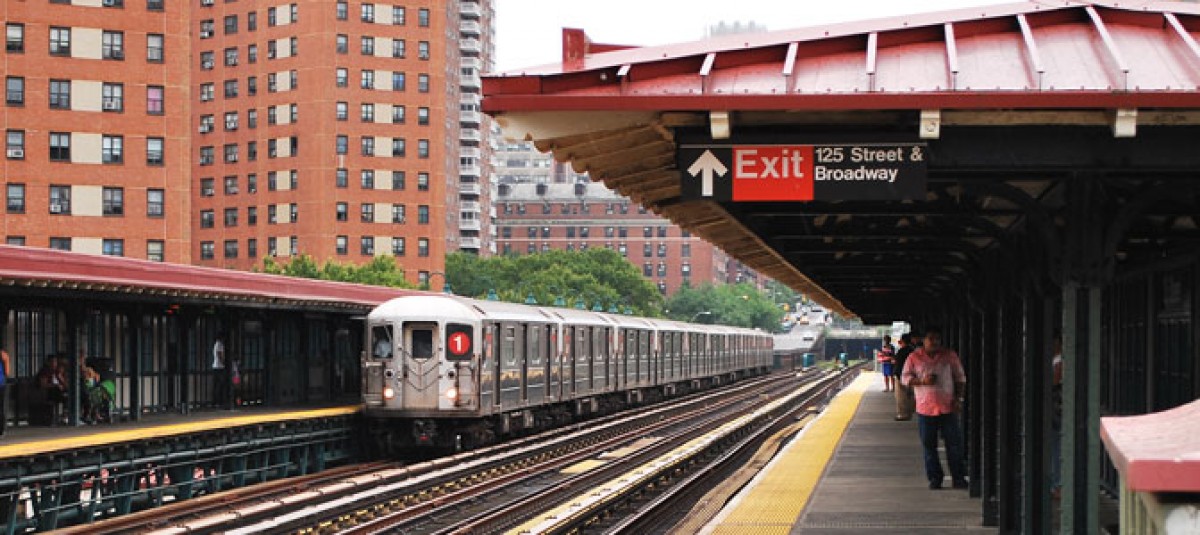

The New York City subway is one of the most iconic elements of the city: fast, extensive, sometimes chaotic, but often the most efficient way to move between Manhattan, Brooklyn, Queens and the Bronx. Over the years, however, not only the way people travel has changed — the way riders pay has evolved as well.
For decades, the MetroCard was the standard way to access trains and buses. Today, New York is completing a major transition: after more than 30 years, the MetroCard is being phased out, and the system is moving fully toward tap-and-go payments through OMNY.
The Subway Map
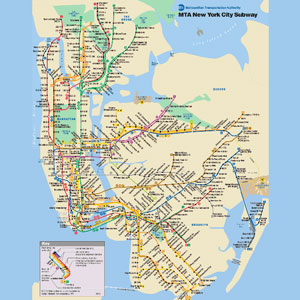 If the New York Subway is the most used method of transport by all New Yorkers, there must be a reason. Despite its many flaws, it is simple to use and remains a safe way to move across Manhattan in the fastest way possible cutting all city traffic especially during rush-hour as well as reach the furthest areas of Brooklyn, Bronx, and Queens without spending a fortune.
 For tourists, it is also a cheap way to explore the city. See below for prices, tickets and option. You can download the map directly from the official website, you will also find a paper copy available for free in subway stations with ticket booths.
MTA Website and Subway Map
1) The transition: MetroCard is being retired, OMNY becomes the standard
If you have visited New York in the past, you are likely familiar with the yellow MetroCard and the swipe at the turnstile. That system is now coming to an end.
- December 31, 2025 is the last day to purchase or refill a MetroCard.
- In 2026, a transition period is expected during which some existing MetroCards may still be accepted to allow riders to use remaining balances.
- Payment across the subway and local buses will increasingly rely on OMNY and contactless tap-and-go methods.
For visitors, the practical takeaway is simple: consider the MetroCard a legacy system and plan to use OMNY as your primary way to pay for public transportation.
2) OMNY: how tap-and-go payments work today
OMNY (One Metro New York) is the MTA’s contactless payment system. Instead of swiping a magnetic card, you simply tap a payment method on the OMNY reader at subway turnstiles or on board buses.
Accepted payment methods
- Contactless credit or debit cards.
- Smartphones using a digital wallet.
- Smartwatches linked to a wallet.
- OMNY Card, a reloadable physical card.
An important rule
To ensure correct fare calculation and benefits, always use the same payment method. Switching between a phone and a physical card — even if linked to the same account — may be treated as separate payment methods.
3) Fare capping: how OMNY can save you money
One of the most visitor-friendly features of OMNY is fare capping. When you use the same payment method for multiple rides within a seven-day period, OMNY automatically tracks your spending.
Once a weekly spending threshold is reached, additional rides within that period are not charged individually. The result is similar to a weekly unlimited pass, without having to purchase one in advance.
This system works best for travelers staying several days and using public transportation frequently — as long as the same card or device is used consistently.
4) OMNY Card: when it makes sense and where to get it
The OMNY Card is a reloadable physical card designed for riders who prefer not to use a bank card or smartphone.
When it may be useful
- If you want to keep transportation expenses separate from your main bank account.
- If you are traveling with family members and want to manage a shared balance.
- If you simply prefer a dedicated physical card.
Availability
OMNY Cards are sold through selected retailers and official MTA distribution points. Availability may expand during the transition period, so it is recommended to check locally once in the city.
5) MetroCard: what happens to remaining balances
After December 31, 2025, MetroCards can no longer be purchased or refilled. However, a transition period in 2026 is expected to allow riders to use remaining balances on existing cards.
If you arrive in New York with an old MetroCard, it may still work for a limited time. That said, switching to OMNY as soon as possible is the safest approach to avoid inconvenience.
Policies related to balance transfers or refunds may be updated by the MTA during the transition, so travelers with significant remaining credit should seek official assistance if needed.
6) Subway lines, maps and how to get oriented
At first glance, the New York City subway can seem complex. In practice, it follows a logical system based on numbers and letters, with many stations serving multiple lines.
Uptown and Downtown
- Uptown generally means northbound in Manhattan.
- Downtown generally means southbound in Manhattan.
Local vs Express
Understanding the difference between local and express trains is essential:
- Local trains stop at most or all stations.
- Express trains skip many stops and are ideal for longer distances.
Always check platform signs carefully, as some stations have separate entrances depending on direction.
Key subway stations and major transit hubs
Some stations play a central role in the subway network and are especially useful for visitors.
- Times Square – 42nd Street: the largest hub in the system, connecting numerous lines across Manhattan.
- Grand Central – 42nd Street: iconic station serving Midtown and regional rail connections.
- 34th Street – Penn Station: main hub for Amtrak, NJ Transit and LIRR.
- Fulton Street: key station in Lower Manhattan.
- Atlantic Avenue – Barclays Center: major transfer point in Brooklyn.
These stations are often large and require walking time for transfers. Following signage carefully helps avoid confusion.
The subway at night: what travelers should know
The New York City subway operates 24 hours a day. Night service, however, differs from daytime service.
- Some lines may not operate overnight.
- Many express trains run as local at night.
- Trains run less frequently, with longer waits.
Checking service notices or using a real-time transit app is especially important during late-night hours.
From a safety perspective, the subway is widely used at night by workers and residents. Staying in well-lit areas, avoiding empty cars and remaining aware of your surroundings is recommended.
Practical tips to ride the subway like a local
Daily riders develop habits that make subway travel smoother and faster.
- Stand on the right, walk on the left on stairs and escalators.
- Have your payment method ready before reaching the turnstile.
- Move into the car instead of stopping at the doors.
- Listen to announcements for service changes.
- Avoid rush hours if possible.
- For short distances, walking may be faster than taking the subway.
Combining subway rides with walking is often the best way to experience New York’s neighborhoods.
7) Fares and budgeting tips
Subway and bus fares are set by the MTA and may change over time. For visitors, the key factor is choosing the right payment method rather than focusing on ticket types.
Tap-and-go payments with OMNY offer flexibility and, through fare capping, can be cost-effective for frequent riders.
8) Practical advice for visitors in 2026
- Choose one payment method and use it consistently.
- Do not mix phone and physical card if you want fare capping benefits.
- Expect service changes at night and on weekends.
- Use subway and buses together for smoother travel.
9) Learn more with New York Welcome guides and tours
Understanding the subway is the first step to enjoying New York without stress. New York Welcome offers:
- City guides with practical advice and neighborhood itineraries.
- Private and themed tours to optimize time and transportation.
If you are planning a trip and want a customized itinerary, our team can help you make the most of your time in the city.
Frequently asked questions
Can I still use a MetroCard in 2026?
Some MetroCards may still be accepted during a transition period, but OMNY is becoming the standard.
What is the easiest option for tourists?
Tap-and-go with a contactless card or smartphone is the simplest solution.
Does fare capping work if I switch payment methods?
No. To benefit from fare capping, you must use the same card or device consistently.
General Useful Tips & Etiquette
If you have any doubts or question, you can also get in touch with us on our Chat. Here some general advice on how to use the NYC Subway and some general rules to follow for proper etiquette and safety --- Always pay attention to the direction of the train and whether it's express or local, you could find yourself going the wrong direction and without any nearby station to get off at.
- If you do happen to board the wrong train, wait for a stop that provides an easy connection to the opposite direction and/or other subway lines. This way you will be able to just "transfer" to the correct train without exiting the train station and thus without swiping your card and pay for another ride. Of course, this only applies to Omny Pay per Ride.
- Regardless of the distance you have to cover, how many stops and how many transfers you need to make, as long as you are underground without exiting the subway, you will only pay 1 ride.
- Calculate your time well, especially if you have to go to the start of a tour or a game/show!!! Depending on the time, always consider at least 5/10 minutes of waiting time for the train to arrive in the station and a few minutes for each stop.
- If you travel at night, choose to sit in the central cars, it's easier to find people around. And for the same reason, if you travel during rush-hour, you might want to try to move to the head or the end of the train since those cars are usually less crowded and might have some empty seats.
- When you have to get on the train, make sure to stand to the side of the door and wait for everyone to get out; especially during rush hours everyone is in a hurry and they will push through!!
- On the escalators, stay to the right so you can leave room to the left for those who run fast!
- Be ready, because you will find a different world underground ... you will find those who perform, sing, dance, act, etc. ... If you see a Pink Flag behind them with the MTA Logo, it means that are actually artists sponsored by the MTA and you can easily take photos, videos and even buoying their merchandise. Other are less "official" but are still happy to be taken photos/videos of, however, you might want to consider leaving a tip. In general, avoid prolonged eye contact with individuals who seem homeless, hostile or mentally unstable as it may provoke an unwanted reaction.
- Overall, NYC and the subway is a pretty safe place especially considering the number of people around us, never the less, use caution and be aware of your surroundings.
- As always ... travel smart, be safe & enjoy your ride! :-)
What Might Interest You:


.jpg)

- Private Walking Tours™
- Private Bespoke Experiences™
- NYC Vacation Packages™
- Corporate & VIP™
- Escorted Coach Tours
- Cruises & Helicopters
- Museum Tickets + NYC Passes
- Broadway Shows
- NYC by Night: Cruises & Activities
- NYC by Holidays: Cruises & Activities
- Restaurants
- Day Trips & Extended Tours
- Guided City Tours
- Bike Tours





.jpg)












 be free!




Unforgettable holiday in New York, fantastic tour operator Irene, who introduced us to the city in all its beauty by telling us the story and describing passionately the life of the place. [...] Irene, I was able to see a Yankees tie as a fan, a dream of mine in the drawer..thanks for your help. Top. Thanks.
From TripAdvisor - May 2025

During my recent trip to New York, I had the pleasure of meeting Irene who accompanied us on a tour of the city, and the experience was unforgettable. From the first moment, she was welcoming, knowledgeable and incredibly passionate [...]
From Google - Feb 2025
We relied on them to organize a group tour in New York. Professional, precise, helpful, friendly. We can only thank Mr. Tony, who followed us impeccably in the planning, and his daughter Irene, an extraordinary guide, who showed us New York in a way that we will not forget. [...]
From Google - November 2024

I am the owner of a Travel Agency. We are Italian in Erba, Eolo travel, I brought a small group and I entrusted myself to Tony. We received great service from start to finish. Punctuality and excellent guides.Thank you for the wonderful experience!!!
From Google - May 2024

Irene? as I have already said elsewhere, she truly deserves all the compliments that are paid to her. Available, friendly, prepared, in short, if you need an Italian speaking guide in New York, she is the right person. You deserve 5 stars and more!
From TripAdvisor - April 2024

An extraordinary experience: I had the pleasure of having Irene as my guide for two days and thanks to the passion she puts into guiding you through the streets of NYC, the anecdotes, the trivia she lets you discover, and the facets she shows during the tour you can't help but fall even more in love with this wonderful city.
From Google - February 2024

Excellent guide, excellent organisation, Irene always ready to respond, available in every topic with competence, you can feel the passion for her work. Her voice accompanied our tour, we will miss you!
From Google - January 2024

[...] unique, very professional, courteous, friendly we can only write positive adjectives, you made us feel at home and have the desire to return. Super recommended. Erica, Marco, Annalisa and Giuseppe.
From Google - December 2023

We did 2 tours together with our guide Irene in one day, Hoboken and the East side. What can I say, in addition to the wonderful places, she has made everything more magical [...]
From Google - January 2023

Irene was a FANTASTIC tour guide! She was so knowledgeable about the area and was so patient with all our questions. We stopped to use the bathroom and we got coffee halfway through, she was so kind! It was a pleasure learning about Brooklyn from you!
From TripAdvisor - April 2022

I’m the biggest fan of Fall activities, but haven’t had a chance to do anything beyond Apple Picking in NJ. I decided to take a last minute 2 day trip with a friend in Hudson Valley, but didn’t know where to start [...] Thankfully I was able to use New York Welcome to do the hard work for us [...]
From TripAdvisor - October 2021
- New York City Travel Guide
- How Much Does New York Cost?
- Best Rooftop Bars in NYC 2025: Where to Drink with a View in New York
- Time Zone and Jet Leg
- Accommodations: Choose Where to Stay
- New York City Public Transportation
- Weather: Fall in New York
- Weather: Winter in New York
- Weather: Spring in New York
- Weather: Summer in New York
- 101+ Excursions in New York City
- Grand Central Terminal
- Covid-19 Updates
- Niagara Falls Day Trip by Airplane™
- Washington DC - Visit the Capital
- Niagara Falls & Toronto & 1000-Islands
- American Triangle: 5-Day Excursion
- American Getaway: 4-Day Excursion
- Discover Boston in 1 Day
- 1-Day: The Hamptons & The Beaches
- How to Visit Niagara Falls From NYC
- NYC & Orlando Travel Package™
- NYC & Chicago Travel Package™
- Pre- or Post-Cruise Escapes™





 Loading...