
Summer in New York: What to do and what to visit
Our Guide to Summer Events in The Big Apple
Categories: What to know

Summer in New York is a season of long days and warm evenings, when the city moves outdoors. Parks fill with free concerts and outdoor movies, rooftop bars open their terraces above the skyline, ferries carry New Yorkers to Governors Island and the beaches, and the Fourth of July lights up the harbor with the country’s biggest fireworks show.
It’s also the season of heat and humidity, crowds at the major attractions and sudden afternoon thunderstorms. With a little planning, though, summer in New York is unforgettable. Here’s everything you need to know, month by month.
New York Summer Weather
New York has hot, humid summers and cold winters. Summer runs from late June to early September: June is usually pleasant, July and August are hot and humid, and by September the air slowly becomes drier and more comfortable.
From mid-July to mid-August, heat and humidity can be a tough combination, with temperatures above 90°F (32°C) during heat waves. Indoors, it’s the opposite: museums, stores, restaurants and the subway are strongly air-conditioned, and the difference between outside and inside can be striking. Always carry a light scarf or a light jacket: you’ll be glad to have it on the subway or in a museum.
The good news is that summer is the season for outdoor living, and New York offers more open-air activities than at any other time of year. Let’s look at the weather and the best things to do month by month.
New York Weather in June
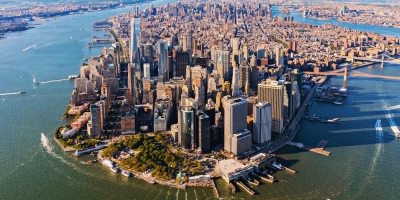
June is one of the best months of the year in New York. The days are at their longest, with the sun setting after 8:30 PM, and the heat is usually still bearable. It’s the perfect month for long walks: along the Hudson River Greenway from Battery Park, the southern tip of Manhattan, up toward Harlem; across the Brooklyn Bridge to DUMBO; or along the waterfront of Long Island City in Queens, with views of Midtown.
It’s also the time to relax in the parks, enjoy the breeze on a harbor cruise, by day or at sunset, and head to Coney Island for a ride on the Wonder Wheel and one of Nathan’s famous hot dogs.
The Average Temperatures and Precipitation in June in New York
In June, average temperatures range from about 65°F (18°C) at night to about 80°F (27°C) during the day, with the first hot spells toward the end of the month. Rain falls on about ten days, often as short showers or afternoon thunderstorms. Together with September, June is one of the most pleasant months of the warm season.
Events in June: What to See
June marks the start of New York’s summer events season. Here are the main appointments. Exact dates for 2027 are announced closer to the season:
- NYC Pride March: on the last Sunday of June (June 27, 2027), one of the largest Pride celebrations in the world marches down Fifth Avenue to Greenwich Village, the birthplace of the LGBTQ+ rights movement at the Stonewall Inn. The whole month is full of events, parties and celebrations across the city.
- Mermaid Parade: on a Saturday in late June, Coney Island welcomes summer with one of the city’s most colorful and joyfully eccentric parades, full of mermaids, sea creatures and costumes of every kind.
- SummerStage: from June to September, the outdoor festival brings free and ticketed concerts to Central Park’s Rumsey Playfield and to parks in all five boroughs.
- Lincoln Center, Summer for the City: through the summer, the Lincoln Center campus hosts free concerts, dance parties and performances outdoors.
- Outdoor movies: the summer film series begin, from Bryant Park’s Movie Nights to the Summer Movie Series on the deck of the Intrepid Sea, Air & Space Museum, with the Hudson River at sunset as a backdrop.
- Shakespeare in the Park: the Public Theater’s summer season at the Delacorte Theater in Central Park, with free tickets distributed by lottery and in line on the day of the show.
For the events of early June, from the Tribeca Festival to the Museum Mile Festival, see also our guide to Spring in New York.
July Weather in New York
July is the hottest month of the year. Average highs are around 85°F (29°C) and lows around 70°F (21°C), but during heat waves, usually in the second half of the month, temperatures can climb above 90°F (32°C) and occasionally approach 100°F (38°C), with high humidity that makes it feel even hotter. Even at night, it often stays above 75°F (24°C), which makes for pleasant evening walks.
Rain is not unusual: July sees about ten to eleven days of rain, often as short but heavy afternoon thunderstorms that clear quickly. A compact umbrella is always useful. Do as New Yorkers do and check a weather app before you head out: most of them tell you when and in which neighborhood it’s expected to rain. It’s not always 100% accurate, but it’s close enough. Stay up to date with the Weather in New York.
What to See in July: July Events
The main event of the month is Independence Day, celebrated on July 4th (a Sunday in 2027) with barbecues, baseball games and, in the evening, the Macy’s Fourth of July Fireworks, the largest fireworks show in the United States, launched from barges on the East River or the Hudson depending on the year. You’ll find all the details on how to celebrate in our guide to Independence Day in New York.
- Fourth of July fireworks cruises: watching the fireworks from the water is one of the most spectacular ways to celebrate. See our July 4th cruises and offers, which sell out early.
- Nathan’s Hot Dog Eating Contest: on July 4th in Coney Island, the famous hot-dog-eating competition draws crowds and TV cameras from across the country.
- Governors Island: take the ferry from Lower Manhattan or Brooklyn and spend the day on this island with unique views of Manhattan, the Statue of Liberty and the harbor. Rent a bike, relax in a hammock in Hammock Grove or enjoy the art installations.
- Outdoor movies: the summer film series continue in Bryant Park, on the Intrepid, in Brooklyn Bridge Park and in other parks across the city. Bring a blanket and sit down among New Yorkers.
- Free concerts: SummerStage, Lincoln Center and many parks host free concerts all summer long.
- NYC Restaurant Week, Summer Edition: usually from late July into August, prix-fixe menus at hundreds of restaurants, including some of the city’s most acclaimed. Dates and participating restaurants are announced a few weeks before.
The Best Activities to Do in New York in July
On hot summer evenings, the best place to be is on the water: a cruise around Manhattan or a sunset sail through New York Harbor is one of the most refreshing ways to see the skyline.
The best activities to do in New York in July


August Weather in New York
August is vacation month, both for New Yorkers, many of whom leave the city to escape the heat, and for travelers from around the world, who arrive in large numbers. Expect lines at museums and attractions and busy restaurants, especially on weekends.
The first half of August is usually as hot as late July, with average highs around 83°F (28°C) and lows around 69°F (21°C). Toward the end of the month, the heat begins to ease, and the first cooler evenings arrive. Rain is slightly less frequent than in July, though summer thunderstorms are still common.
It’s a lovely month for parks and the waterfront, but avoid the hottest hours, roughly 1:00 to 4:00 PM, in full sun: that’s the perfect time for a museum, a Broadway matinee or lunch in an air-conditioned restaurant. In Central Park, a bike ride or a rowboat on the Lake are always fun, and Brooklyn’s Prospect Park and Governors Island are wonderful alternatives.
What to See in August: August Events
- US Open: from late August to early September, the world’s best tennis players compete at the USTA Billie Jean King National Tennis Center in Flushing Meadows, Queens. Tickets for the main sessions at Arthur Ashe Stadium sell out quickly; for a hassle-free experience, see our US Open Travel Package™.
- Summer Streets: on Saturday mornings in August, Park Avenue and other streets close to traffic and become a huge open-air space for walking, cycling, running and family activities.
- NYC Restaurant Week: the summer edition continues, a great chance to try that restaurant you’ve always wanted to book.
- Festivals and parades: August brings the Giglio Feast in East Harlem, a beloved Italian American tradition, the India Day Parade on Madison Avenue and the Hong Kong Dragon Boat Festival in Flushing Meadows Corona Park, Queens.
- Culture under the stars: Shakespeare in the Park in Central Park, evenings of music and dance at Lincoln Center and the last outdoor movies in Bryant Park.
- Jazz Age Lawn Party: on Governors Island, a weekend dive into the 1920s with jazz, swing dancing and vintage costumes.
- Blues BBQ Festival: on Hudson River Park’s piers, a celebration of blues music and barbecue.
What to Do in New York in August
For a special evening, nothing beats dinner on the water, with Manhattan lighting up around you.
What to do in New York in August


Travel: Best Time to Visit New York
When is the best time to visit New York? There’s no single answer. The milder months, from April to early June and from September to October, offer the most pleasant temperatures, less humidity and nature at its best: cherry blossoms and tulips in spring, fall foliage in the parks in autumn. Summer, on the other hand, is the season of outdoor living, free events and long evenings, perfect if you love the energy of the city and don’t mind the heat.
And if you think of New York only as a metropolis of skyscrapers, concrete and traffic, think again: the city has an extraordinary amount of green space, from Central Park and Prospect Park to the High Line, Hudson River Park, Brooklyn Bridge Park and Governors Island, plus beaches you can reach by subway.
Visit New York in the Summer: Our Tips
What to do in summer
New York offers so many summer activities that your only problem will be choosing. Just be smart, as you would at home in the heat: wear a hat, apply sunscreen and drink plenty of water. To avoid the crowds, visit the most popular sights early in the morning or in the evening, and spend the hottest hours in museums or in neighborhoods off the usual tourist routes, where you’ll discover the New York of New Yorkers.
Don’t miss a drink on a rooftop bar at sunset: summer is their season, and the views of the skyline are unforgettable. You’ll find our favorites in our guide to the Best Rooftop Bars in NYC. And make the most of the water around the city: see our harbor cruises and sailing trips.


How to dress
Pack light, breathable clothes: linen and cotton, T-shirts, shorts and summer dresses, plus a light jacket or a shawl for air-conditioned spaces and cooler evenings. Comfortable shoes are essential, because in New York you’ll walk a lot. Add sunglasses, a hat, sunscreen and a small backpack for a water bottle and a towel if you stop in a park. If you plan to go to the beach, bring a swimsuit, and keep a compact umbrella and a light rain jacket for summer thunderstorms. For an elegant dinner or a rooftop evening, add something a little dressier.
Beach & Sea in the Summer in New York
Yes, you can go to the beach in New York, and it’s easier than you might think. The closest is Coney Island, at the end of several subway lines in Brooklyn: for the price of a single ride ($3, paid with OMNY), you get a long sandy beach, the historic boardwalk and Luna Park’s rides, including the Wonder Wheel and the legendary Cyclone roller coaster. Stop at Nathan’s for a hot dog, and if you’re here in late June, don’t miss the Mermaid Parade.
Other beaches you can visit for the day:
- Rockaway Beach, in Queens: popular with surfers and New Yorkers, reachable by subway or, more pleasantly, by NYC Ferry from Wall Street.
- Sandy Hook, in New Jersey: a beautiful nature reserve with long beaches and distant views of the Manhattan skyline, reachable by ferry from Manhattan in about 40 minutes. One of the most beautiful beaches for a day away from the city.
- Long Beach, on Long Island: easy to reach by Long Island Rail Road train from Penn Station.
- Jones Beach, on Long Island: one of the most famous beaches on the East Coast, reachable by LIRR train from Penn Station to Freeport and then a shuttle bus.
Would you rather discover Long Island’s most elegant side, between wineries, historic estates and beaches, with a private guide and car? See our Long Island Exploration™.
Sandy Hook in Summer


Summer in New York FAQs
Summer in New York is hot and humid. In July, the hottest month, average highs are around 85°F (29°C) and lows around 70°F (21°C), but during heat waves temperatures can climb above 90°F (32°C). June is usually more pleasant, with highs around 80°F (27°C), and the heat begins to ease toward the end of August.
Yes, if you love outdoor living. Summer brings free concerts and outdoor movies in the parks, rooftop bars, harbor cruises, beaches you can reach by subway and the Fourth of July fireworks. The downsides are heat, humidity and crowds: visit the main sights early in the morning or in the evening, and spend the hottest hours in museums or indoors.
The Macy’s Fourth of July Fireworks are launched from barges on the East River or the Hudson River, depending on the year. Viewing areas along the waterfront fill up hours in advance, so many visitors choose a fireworks cruise, which offers some of the best views from the water. In 2027, July 4th falls on a Sunday.
Yes. The closest beach is Coney Island in Brooklyn, reachable by subway for the price of a single ride. Rockaway Beach in Queens can be reached by subway or NYC Ferry, Sandy Hook in New Jersey by ferry from Manhattan, and Long Beach and Jones Beach on Long Island by train from Penn Station.
Pack light, breathable clothes, comfortable walking shoes, sunglasses, a hat and sunscreen. Always bring a light jacket or scarf for air-conditioned museums, stores and subways, and a compact umbrella for afternoon thunderstorms. For elegant dinners or rooftop evenings, add something a little dressier.
Seasons in New York City
Every season in New York has its own character. To choose the right time for your trip, read our other seasonal guides:


Categories: What to know

Categories: What to know

Categories: What to know
ALL TOURS & ACTIVITIES
- Private Walking Tours™
- Private Bespoke Experiences™
- NYC Vacation Packages™
- Corporate & VIP™
- Escorted Coach Tours
- Cruises & Helicopters
- Museum Tickets + NYC Passes
- Broadway Shows
- NYC by Night: Cruises & Activities
- NYC by Holidays: Cruises & Activities
- Restaurants
- Day Trips & Extended Tours
- Guided City Tours
- Bike Tours




.jpg)











 be free!


Unforgettable holiday in New York, fantastic tour operator Irene, who introduced us to the city in all its beauty by telling us the story and describing passionately the life of the place. [...] Irene, I was able to see a Yankees tie as a fan, a dream of mine in the drawer..thanks for your help. Top. Thanks.
From TripAdvisor - May 2025

During my recent trip to New York, I had the pleasure of meeting Irene who accompanied us on a tour of the city, and the experience was unforgettable. From the first moment, she was welcoming, knowledgeable and incredibly passionate [...]
From Google - Feb 2025
We relied on them to organize a group tour in New York. Professional, precise, helpful, friendly. We can only thank Mr. Tony, who followed us impeccably in the planning, and his daughter Irene, an extraordinary guide, who showed us New York in a way that we will not forget. [...]
From Google - November 2024

I am the owner of a Travel Agency. We are Italian in Erba, Eolo travel, I brought a small group and I entrusted myself to Tony. We received great service from start to finish. Punctuality and excellent guides.Thank you for the wonderful experience!!!
From Google - May 2024

Irene? as I have already said elsewhere, she truly deserves all the compliments that are paid to her. Available, friendly, prepared, in short, if you need an Italian speaking guide in New York, she is the right person. You deserve 5 stars and more!
From TripAdvisor - April 2024

An extraordinary experience: I had the pleasure of having Irene as my guide for two days and thanks to the passion she puts into guiding you through the streets of NYC, the anecdotes, the trivia she lets you discover, and the facets she shows during the tour you can't help but fall even more in love with this wonderful city.
From Google - February 2024

Excellent guide, excellent organisation, Irene always ready to respond, available in every topic with competence, you can feel the passion for her work. Her voice accompanied our tour, we will miss you!
From Google - January 2024

[...] unique, very professional, courteous, friendly we can only write positive adjectives, you made us feel at home and have the desire to return. Super recommended. Erica, Marco, Annalisa and Giuseppe.
From Google - December 2023

We did 2 tours together with our guide Irene in one day, Hoboken and the East side. What can I say, in addition to the wonderful places, she has made everything more magical [...]
From Google - January 2023

Irene was a FANTASTIC tour guide! She was so knowledgeable about the area and was so patient with all our questions. We stopped to use the bathroom and we got coffee halfway through, she was so kind! It was a pleasure learning about Brooklyn from you!
From TripAdvisor - April 2022

I’m the biggest fan of Fall activities, but haven’t had a chance to do anything beyond Apple Picking in NJ. I decided to take a last minute 2 day trip with a friend in Hudson Valley, but didn’t know where to start [...] Thankfully I was able to use New York Welcome to do the hard work for us [...]
From TripAdvisor - October 2021
Information about New York
- New York City Travel Guide
- How Much Does New York Cost?
- Christmas in New York
- Best Rooftop Bars in NYC: Where to Drink with a View in New York
- Time Zone and Jet Lag
- Accommodations: Choose Where to Stay
- New York City Public Transportation
- Weather: Fall in New York
- Weather: Winter in New York
- Weather: Spring in New York
- Weather: Summer in New York
- 101+ Excursions in New York City
- Grand Central Terminal
- Covid-19 Updates
Sightseeing & City Tours in NYC
Day Trips from NYC
- Niagara Falls Day Trip by Airplane™
- Washington DC - Visit the Capital
- Niagara Falls & Toronto & 1000-Islands
- American Triangle: 5-Day Excursion
- American Getaway: 4-Day Excursion
- Discover Boston in 1 Day
- 1-Day: The Hamptons & The Beaches
- How to Visit Niagara Falls From NYC
- NYC & Orlando Travel Package™
- NYC & Chicago Travel Package™
- Pre- or Post-Cruise Escapes™
CORPORATE & VIP SERVICES
Our Destinations in The US
Our Company
We are social



 Join our community of over 350K Followers!
Office

 Loading...