
High Line New York: Complete Guide to Manhattan's Elevated Park
The Urban Park On The Former Elevated Freight Railroad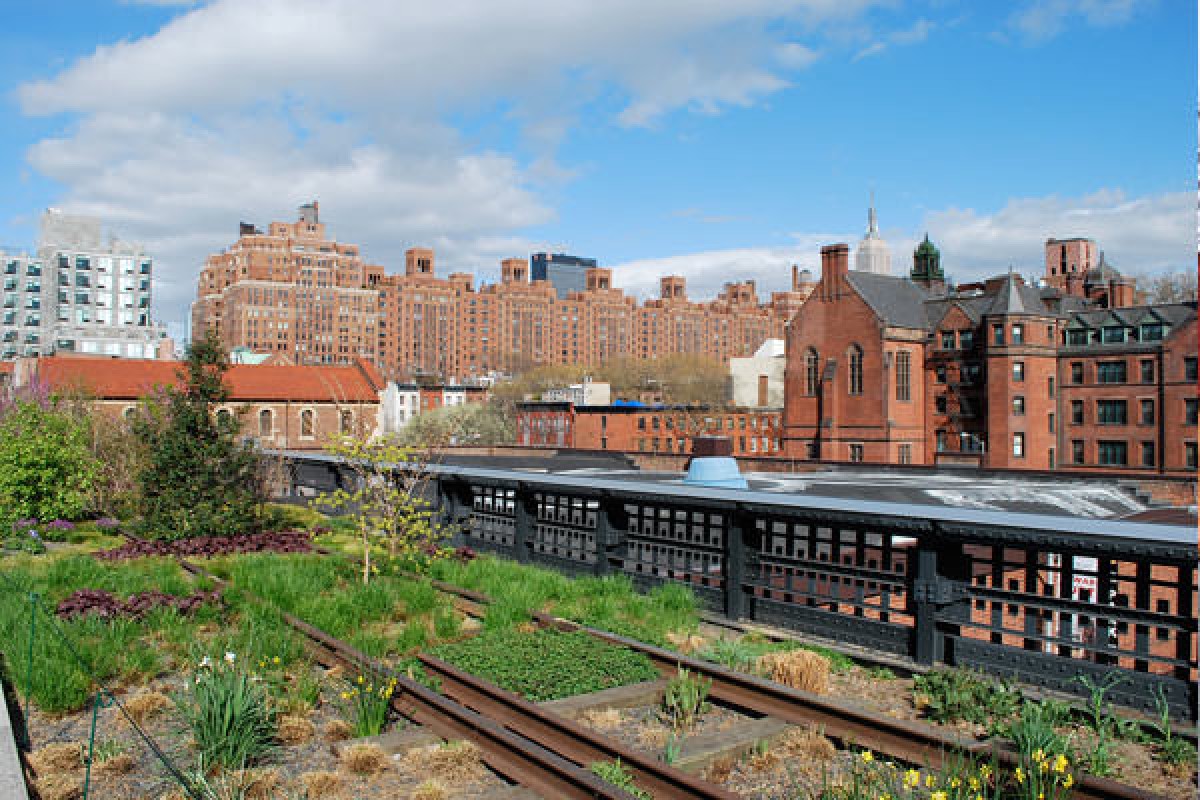
Categories: What to see - Parks
WHERE:Meatpacking District OPENING HOURS: 07:00 am - 10:00 pm
ACTIVITY: Sightseeing
The High Line is one of New York's most distinctive and beloved attractions. Suspended above the buildings of Manhattan's West Side, this former industrial railway transformed into an urban park has become one of the most celebrated symbols of the city's renewal.
Walking the High Line means seeing New York from a perspective unlike any other — one shaped not only by its elevated position, but by its distance from heavy traffic and the chance to move through gardens, art installations, architectural vistas, and sweeping views of the Hudson River.
The park draws around 8 million visitors every year and is considered an essential stop for anyone visiting Manhattan — not only for its beauty, but for a story that speaks of reinvention and second chances.
At the time, the West Side was one of the city's most active industrial zones. Freight trains ran directly through Manhattan's streets, creating serious safety hazards and causing frequent accidents. The new infrastructure was designed to eliminate these risks, allowing trains to reach warehouses, factories, and depots without interfering with street traffic. For decades the line carried meat, dairy, produce, and other essential goods in complete safety.
As the decades passed, road transport gradually replaced rail, and the High Line fell into disuse. The last train ran in 1980.
In the years that followed, the structure was left entirely abandoned. Many saw the old railway as an industrial relic destined for demolition. But something unexpected happened: nature slowly began to reclaim the space. Wildflowers, grasses, and shrubs took root between the tracks, turning the derelict infrastructure into a kind of hidden elevated garden above the city.
By the late 1990s the High Line was in serious danger of disappearing. It was then that two neighborhood residents, Joshua David and Robert Hammond, founded the Friends of the High Line. Their goal was to save the structure and imagine an entirely new future for the abandoned railway. The idea of transforming it into a public park seemed ambitious, but it quickly won support from local communities, urban planners, architects, and city officials.
After years of design work and redevelopment, the first section of the High Line opened on June 9, 2009. The project continued in phases until the main route was completed in 2014, with the panoramic area known as The Spur opening in 2019.
Today the High Line is recognized as one of the world's most successful examples of urban regeneration. From a symbol of industrial decline, it has become an international model for reclaiming public space — one that brings together architecture, landscape, sustainability, and culture. Each year it welcomes millions of visitors, outpacing even some of New York's most celebrated attractions.
Change came in 1999, when two neighborhood residents founded the Friends of the High Line — an organization with a single goal: save the railway and turn it into public space.
The idea found wide support, and within a few years the first remediation and redevelopment work began. The park's first section opened in 2009, followed by successive phases of development, with full completion in 2015. In 2019, a new section known as The Spur opened — the final panoramic zone connecting to Hudson Yards.
Today the High Line stands as one of the most significant urban regeneration projects in the world.
While the route can be walked in either direction, the recommended approach is from north to south — moving from the futuristic architecture of Hudson Yards and gradually arriving at the more artistic and historic character of Chelsea and the Meatpacking District.
The full walk takes roughly 45 to 90 minutes without stops, but to truly experience everything the park has to offer, plan on spending at least half a day.
Among the most celebrated and spectacular sections:
This is where some of New York's most photographed attractions are found, including The Vessel, designed by Thomas Heatherwick, and The Edge, one of the highest observation decks in the city.
This neighborhood is home to more than 300 contemporary art galleries and is considered one of the world's leading art districts. Walking the adjacent streets, you encounter showrooms, studios, urban installations, and exhibition spaces, many of them open to the public free of charge.
Once an industrial zone of slaughterhouses and warehouses, it is now one of Manhattan's most elegant and vibrant neighborhoods — home to boutiques, rooftop bars, luxury hotels, and some of the city's most fashionable venues.
Just steps away, the West Village unfolds as one of New York's most charming and authentic areas.
Starting from the north, Hudson Yards offers modern attractions and spectacular views. The Edge lets you look out over Manhattan from the 100th floor, while The Vessel has become one of the city's most photographed architectural landmarks.
At the heart of the route sits the celebrated Chelsea Market, housed in the former National Biscuit Company factory — the birthplace of the Oreo cookie. Today it is one of New York's most beloved food markets.
Nearby, Little Island is well worth a visit: an artificial park suspended over the Hudson River, particularly beautiful in spring and summer.
At the southern end of the High Line stands the Whitney Museum of American Art, designed by Renzo Piano and dedicated to contemporary American art.
History and music lovers can also make their way to the legendary Chelsea Hotel, where artists including Jack Kerouac, Janis Joplin, and the Sex Pistols once stayed.
If you'd like to explore the history and character of New York's most iconic neighborhoods in depth, consider joining one of our organized experiences — including our guided Manhattan tour, designed for those who want to discover the city's most storied places.
In spring, the park bursts into color as the plantings come into bloom and temperatures become genuinely pleasant. It is one of the finest times to stroll at leisure and photograph the contrast between greenery and the Manhattan skyline.
Summer is the liveliest and most visited season. Long evenings allow for visits well into the night, with spectacular sunsets over the Hudson River.
Fall is often considered the most atmospheric time: urban foliage creates a strikingly beautiful setting and the weather remains ideal for walking.
Winter brings a quieter, less crowded High Line. Even without the lush summer planting, the route retains a cinematic, almost otherworldly quality all its own.
To reach the northern section, take the 7 train to 34th Street–Hudson Yards.
For the central and southern sections, the A, C, E, and L trains stop at 14th Street/8th Avenue.
Dogs, bicycles, and scooters are not permitted inside the park.
Throughout the route, rotating temporary installations, public sculptures, and site-specific works change with the seasons. The park itself was designed to integrate with the urban fabric while paying homage to the industrial character of its railway origins.
Architecturally, the walk also offers close-up views of buildings designed by some of the world's most important contemporary architects, including Zaha Hadid and Renzo Piano.
The combination of urban design, public green space, and skyline makes the High Line one of the most photogenic spots in Manhattan.
10th Avenue Square is one of the best spots for photography, offering open sightlines directly down onto the street and the surrounding buildings.
As you walk, look east regularly: the Empire State Building appears between the buildings at several points along the route.
A practical tip for the end of the walk: finish at Chelsea Market, which makes an ideal lunch stop or afternoon break after the stroll.

The High Line is one of New York's most distinctive and beloved attractions. Suspended above the buildings of Manhattan's West Side, this former industrial railway transformed into an urban park has become one of the most celebrated symbols of the city's renewal.
Walking the High Line means seeing New York from a perspective unlike any other — one shaped not only by its elevated position, but by its distance from heavy traffic and the chance to move through gardens, art installations, architectural vistas, and sweeping views of the Hudson River.
The park draws around 8 million visitors every year and is considered an essential stop for anyone visiting Manhattan — not only for its beauty, but for a story that speaks of reinvention and second chances.
History and Evolution of the High Line
The story of the High Line begins in 1934, when construction started as part of the West Side Line project: an elevated freight railway built to move goods more quickly and safely along the western edge of Manhattan.At the time, the West Side was one of the city's most active industrial zones. Freight trains ran directly through Manhattan's streets, creating serious safety hazards and causing frequent accidents. The new infrastructure was designed to eliminate these risks, allowing trains to reach warehouses, factories, and depots without interfering with street traffic. For decades the line carried meat, dairy, produce, and other essential goods in complete safety.
As the decades passed, road transport gradually replaced rail, and the High Line fell into disuse. The last train ran in 1980.
In the years that followed, the structure was left entirely abandoned. Many saw the old railway as an industrial relic destined for demolition. But something unexpected happened: nature slowly began to reclaim the space. Wildflowers, grasses, and shrubs took root between the tracks, turning the derelict infrastructure into a kind of hidden elevated garden above the city.
By the late 1990s the High Line was in serious danger of disappearing. It was then that two neighborhood residents, Joshua David and Robert Hammond, founded the Friends of the High Line. Their goal was to save the structure and imagine an entirely new future for the abandoned railway. The idea of transforming it into a public park seemed ambitious, but it quickly won support from local communities, urban planners, architects, and city officials.
After years of design work and redevelopment, the first section of the High Line opened on June 9, 2009. The project continued in phases until the main route was completed in 2014, with the panoramic area known as The Spur opening in 2019.
Today the High Line is recognized as one of the world's most successful examples of urban regeneration. From a symbol of industrial decline, it has become an international model for reclaiming public space — one that brings together architecture, landscape, sustainability, and culture. Each year it welcomes millions of visitors, outpacing even some of New York's most celebrated attractions.
The Urban Rebirth of the High Line
For many years the High Line sat abandoned and slated for demolition. Wildflowers, grasses, and urban vegetation colonized the old tracks, transforming the landscape entirely.Change came in 1999, when two neighborhood residents founded the Friends of the High Line — an organization with a single goal: save the railway and turn it into public space.
The idea found wide support, and within a few years the first remediation and redevelopment work began. The park's first section opened in 2009, followed by successive phases of development, with full completion in 2015. In 2019, a new section known as The Spur opened — the final panoramic zone connecting to Hudson Yards.
Today the High Line stands as one of the most significant urban regeneration projects in the world.
The High Line Route: What to See Along the Way
The High Line stretches approximately 1.45 miles (2.3 kilometers) between Hudson Yards and the Meatpacking District, passing through some of Manhattan's most compelling neighborhoods and offering constantly changing views and atmospheres.While the route can be walked in either direction, the recommended approach is from north to south — moving from the futuristic architecture of Hudson Yards and gradually arriving at the more artistic and historic character of Chelsea and the Meatpacking District.
The full walk takes roughly 45 to 90 minutes without stops, but to truly experience everything the park has to offer, plan on spending at least half a day.
The High Line's Most Beautiful Stops
One of the most compelling aspects of the High Line is the sheer variety of scenes that unfold along the route.Among the most celebrated and spectacular sections:
- the Hudson Yards Spur, with its panoramic terrace and views of The Vessel;
- 10th Avenue Square, with stepped seating overlooking the flow of Manhattan traffic below;
- the Chelsea Market Passage, a semi-covered stretch with a distinctly industrial character;
- the Diller-von Furstenberg Sundeck, an ideal spot for a relaxed pause;
- the southern end near the Whitney Museum and Gansevoort Street.
High Line Chelsea Hudson Yards: The Neighborhoods Along the Way
The northern section of the High Line plunges you immediately into Manhattan's most contemporary face. Hudson Yards is the city's newest neighborhood — defined by soaring modern towers, sleek plazas, and landmark architectural works.This is where some of New York's most photographed attractions are found, including The Vessel, designed by Thomas Heatherwick, and The Edge, one of the highest observation decks in the city.
Chelsea: Contemporary Art and Creativity
Heading south, the route enters Chelsea, the artistic heart of the High Line experience.This neighborhood is home to more than 300 contemporary art galleries and is considered one of the world's leading art districts. Walking the adjacent streets, you encounter showrooms, studios, urban installations, and exhibition spaces, many of them open to the public free of charge.
Meatpacking District and West Village
The final stretch of the route leads into the Meatpacking District, a neighborhood that has undergone a remarkable transformation over the past two decades.Once an industrial zone of slaughterhouses and warehouses, it is now one of Manhattan's most elegant and vibrant neighborhoods — home to boutiques, rooftop bars, luxury hotels, and some of the city's most fashionable venues.
Just steps away, the West Village unfolds as one of New York's most charming and authentic areas.
What to See Near the High Line in New York
The High Line fits perfectly into a broader West Side Manhattan itinerary.Starting from the north, Hudson Yards offers modern attractions and spectacular views. The Edge lets you look out over Manhattan from the 100th floor, while The Vessel has become one of the city's most photographed architectural landmarks.
At the heart of the route sits the celebrated Chelsea Market, housed in the former National Biscuit Company factory — the birthplace of the Oreo cookie. Today it is one of New York's most beloved food markets.
Nearby, Little Island is well worth a visit: an artificial park suspended over the Hudson River, particularly beautiful in spring and summer.
At the southern end of the High Line stands the Whitney Museum of American Art, designed by Renzo Piano and dedicated to contemporary American art.
History and music lovers can also make their way to the legendary Chelsea Hotel, where artists including Jack Kerouac, Janis Joplin, and the Sex Pistols once stayed.
If you'd like to explore the history and character of New York's most iconic neighborhoods in depth, consider joining one of our organized experiences — including our guided Manhattan tour, designed for those who want to discover the city's most storied places.
The High Line Through the Seasons
Wondering when the best time to visit the High Line might be? Every season brings its own atmosphere and appeal.In spring, the park bursts into color as the plantings come into bloom and temperatures become genuinely pleasant. It is one of the finest times to stroll at leisure and photograph the contrast between greenery and the Manhattan skyline.
Summer is the liveliest and most visited season. Long evenings allow for visits well into the night, with spectacular sunsets over the Hudson River.
Fall is often considered the most atmospheric time: urban foliage creates a strikingly beautiful setting and the weather remains ideal for walking.
Winter brings a quieter, less crowded High Line. Even without the lush summer planting, the route retains a cinematic, almost otherworldly quality all its own.
High Line New York: Opening Hours and How to Get There
The High Line is free and open year-round. Hours vary by season:- December–March: 7:00 AM – 7:00 PM;
- April–May: 7:00 AM – 10:00 PM;
- June–September: 7:00 AM – 11:00 PM;
- October–November: 7:00 AM – 10:00 PM.
To reach the northern section, take the 7 train to 34th Street–Hudson Yards.
For the central and southern sections, the A, C, E, and L trains stop at 14th Street/8th Avenue.
Dogs, bicycles, and scooters are not permitted inside the park.
Map - Entrances to The High Line & Video of the Surroundings
The High Line for Art and Architecture Lovers
The High Line is a must for anyone passionate about art, photography, and contemporary architecture.Throughout the route, rotating temporary installations, public sculptures, and site-specific works change with the seasons. The park itself was designed to integrate with the urban fabric while paying homage to the industrial character of its railway origins.
Architecturally, the walk also offers close-up views of buildings designed by some of the world's most important contemporary architects, including Zaha Hadid and Renzo Piano.
The combination of urban design, public green space, and skyline makes the High Line one of the most photogenic spots in Manhattan.
Practical Tips for Visiting the High Line
To get the most out of the High Line, visit early in the morning or around sunset — when the light is at its most beautiful and crowds are at their thinnest.10th Avenue Square is one of the best spots for photography, offering open sightlines directly down onto the street and the surrounding buildings.
As you walk, look east regularly: the Empire State Building appears between the buildings at several points along the route.
A practical tip for the end of the walk: finish at Chelsea Market, which makes an ideal lunch stop or afternoon break after the stroll.
Frequently Asked Questions About the High Line in New York
Visiting the High Line is straightforward, but it's natural to have a few practical questions before setting out — especially if you're planning to include it as part of a broader Manhattan itinerary.
Yes, entry to the High Line is completely free. The park is public and open year-round with no reservations or tickets required.
The full route is approximately 1.45 miles (2.3 kilometers), connecting Hudson Yards in northern Manhattan to Gansevoort Street in the Meatpacking District.
The main access points are at Gansevoort Street, 14th Street, 16th Street, 23rd Street, and 34th Street. Many entrances have elevators, making the park fully accessible.
The High Line is open every day of the year. Hours vary by season: in winter it closes at 7:00 PM, while in summer it stays open until 11:00 PM.
Walking the full route without stopping takes about 45 to 90 minutes. With photos, breaks, and nearby sights factored in, plan on two to three hours for the full experience.
Yes, the High Line is a great choice for families with kids. The path is pedestrian-only, safe, and away from city traffic, with plenty of spots to stop and rest along the way.
Early morning and sunset are the most beautiful times of day. Spring and fall offer the most pleasant weather and the best light for taking in the views.
No, bicycles and scooters are not allowed inside the park. The High Line is designed exclusively for walking.
Yes, several entrances have elevators and the entire route is fully accessible for wheelchairs and strollers.
Starting from the north at Hudson Yards is the recommended approach. Walking south takes you gradually from Manhattan's most contemporary neighborhoods through the historic and artistic character of Chelsea and the Meatpacking District.
Final Thoughts
The High Line in New York is far more than an urban park. It is a place that captures New York's extraordinary ability to reinvent itself — transforming an abandoned railway into one of the city's most iconic public spaces.Between contemporary architecture, art, nature, and urban panoramas, the High Line offers an experience unlike the typical Manhattan tourist trail. A walk here reveals a more creative, unhurried, and surprising New York — suspended between an industrial past and an urban future.
Photos: High Line Park
High Line - The Manhattan's Elevated Park by NewYork-Welcome
ALL TOURS & ACTIVITIES
- Private Walking Tours™
- Private Bespoke Experiences™
- NYC Vacation Packages™
- Corporate & VIP™
- Escorted Coach Tours
- Cruises & Helicopters
- Museum Tickets + NYC Passes
- Broadway Shows
- NYC by Night: Cruises & Activities
- NYC by Holidays: Cruises & Activities
- Restaurants
- Day Trips & Extended Tours
- Guided City Tours
- Bike Tours


.jpg)






 be free!




Unforgettable holiday in New York, fantastic tour operator Irene, who introduced us to the city in all its beauty by telling us the story and describing passionately the life of the place. [...] Irene, I was able to see a Yankees tie as a fan, a dream of mine in the drawer..thanks for your help. Top. Thanks.
From TripAdvisor - May 2025

During my recent trip to New York, I had the pleasure of meeting Irene who accompanied us on a tour of the city, and the experience was unforgettable. From the first moment, she was welcoming, knowledgeable and incredibly passionate [...]
From Google - Feb 2025
We relied on them to organize a group tour in New York. Professional, precise, helpful, friendly. We can only thank Mr. Tony, who followed us impeccably in the planning, and his daughter Irene, an extraordinary guide, who showed us New York in a way that we will not forget. [...]
From Google - November 2024

I am the owner of a Travel Agency. We are Italian in Erba, Eolo travel, I brought a small group and I entrusted myself to Tony. We received great service from start to finish. Punctuality and excellent guides.Thank you for the wonderful experience!!!
From Google - May 2024

Irene? as I have already said elsewhere, she truly deserves all the compliments that are paid to her. Available, friendly, prepared, in short, if you need an Italian speaking guide in New York, she is the right person. You deserve 5 stars and more!
From TripAdvisor - April 2024

An extraordinary experience: I had the pleasure of having Irene as my guide for two days and thanks to the passion she puts into guiding you through the streets of NYC, the anecdotes, the trivia she lets you discover, and the facets she shows during the tour you can't help but fall even more in love with this wonderful city.
From Google - February 2024

Excellent guide, excellent organisation, Irene always ready to respond, available in every topic with competence, you can feel the passion for her work. Her voice accompanied our tour, we will miss you!
From Google - January 2024

[...] unique, very professional, courteous, friendly we can only write positive adjectives, you made us feel at home and have the desire to return. Super recommended. Erica, Marco, Annalisa and Giuseppe.
From Google - December 2023

We did 2 tours together with our guide Irene in one day, Hoboken and the East side. What can I say, in addition to the wonderful places, she has made everything more magical [...]
From Google - January 2023

Irene was a FANTASTIC tour guide! She was so knowledgeable about the area and was so patient with all our questions. We stopped to use the bathroom and we got coffee halfway through, she was so kind! It was a pleasure learning about Brooklyn from you!
From TripAdvisor - April 2022

I’m the biggest fan of Fall activities, but haven’t had a chance to do anything beyond Apple Picking in NJ. I decided to take a last minute 2 day trip with a friend in Hudson Valley, but didn’t know where to start [...] Thankfully I was able to use New York Welcome to do the hard work for us [...]
From TripAdvisor - October 2021
Information about New York
- New York City Travel Guide
- How Much Does New York Cost?
- Best Rooftop Bars in NYC 2025: Where to Drink with a View in New York
- Time Zone and Jet Leg
- Accommodations: Choose Where to Stay
- New York City Public Transportation
- Weather: Fall in New York
- Weather: Winter in New York
- Weather: Spring in New York
- Weather: Summer in New York
- 101+ Excursions in New York City
- Grand Central Terminal
- Covid-19 Updates
Sightseeing & City Tours in NYC
Day Trips from NYC
- Niagara Falls Day Trip by Airplane™
- Washington DC - Visit the Capital
- Niagara Falls & Toronto & 1000-Islands
- American Triangle: 5-Day Excursion
- American Getaway: 4-Day Excursion
- Discover Boston in 1 Day
- 1-Day: The Hamptons & The Beaches
- How to Visit Niagara Falls From NYC
- NYC & Orlando Travel Package™
- NYC & Chicago Travel Package™
- Pre- or Post-Cruise Escapes™
CORPORATE & VIP SERVICES
Our Destinations in The US
Our Company
We are social



 Join our community of over 350K Followers!
Office
 Loading...