
Visiting Ground Zero in New York: Guide to the 9/11 Memorial and Museum
A place where history, architecture, and memory converge at the heart of Manhattan.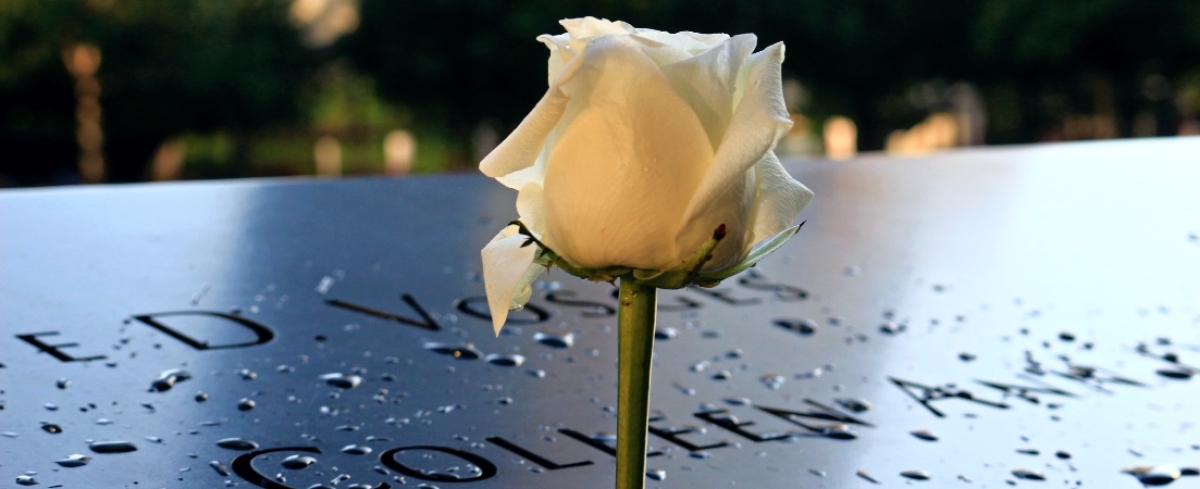
Categories: What to see

Some places are visited for their architecture, others for their views or artistic importance. Then there are places, like the 9/11 Memorial in New York, where a visit takes on an entirely different meaning. People don't come here simply to learn about a chapter of American history — they come to pay tribute to the thousands of people who lost their lives in the attacks of September 11, 2001, and to understand how profoundly that day changed the world.
Everyone remembers the moment they first heard the news of the Twin Towers collapsing — images seared into the collective consciousness that have never faded. Visiting Ground Zero means confronting that memory in a real place, where silence and reverence take precedence over everything else.
This guide covers what to see, how to plan your visit, the differences between the Memorial and the Museum, ticket prices, and the practical details you'll want to know before arriving at Ground Zero.
September 11, 2001: The Day That Changed New York and the World
The attacks of September 11, 2001 claimed the lives of nearly three thousand people from more than ninety countries. Among the victims were office workers in the Twin Towers, passengers and crew members aboard the hijacked flights, first responders, and ordinary citizens going about their day.On the morning of September 11, four commercial aircraft were hijacked by terrorists affiliated with al-Qaeda. Two of the planes were flown into the Twin Towers of the World Trade Center: the first struck the North Tower at 8:46 AM, the second hit the South Tower at 9:03 AM. Less than two hours after the first impact, both towers had collapsed, causing destruction without precedent in the heart of Manhattan. A third plane struck the Pentagon near Washington, D.C., while a fourth went down in Pennsylvania after passengers attempted to retake control of the aircraft.
The consequences of that day reverberated around the world, fundamentally reshaping international politics, airport security, and the way civilization understands terrorism and the vulnerability of great cities. The 9/11 Memorial remains one of the defining symbols of that tragedy — and of New York's long journey of reconstruction and renewal.
The 9/11 Memorial in New York: The Art of Holding an Absence
The 9/11 Memorial in New York is not a monument in the traditional sense. It does not celebrate a victory or commemorate a triumph. Its purpose is something rarer: to hold an absence.Ground Zero occupies the exact site where the Twin Towers of the World Trade Center stood until the morning of September 11, 2001. Every year, millions of people from every corner of the world pass through this space, which is given entirely over to memory, quiet, and reflection.
Reflecting Absence: The Design That Honors What Is No Longer There
The 9/11 Memorial is the realization of the Reflecting Absence design, conceived by architect Michael Arad and landscape architect Peter Walker, selected through an international competition that drew thousands of proposals from around the world.The project's name encapsulates its guiding principle with precision: to honor what has been lost without replacing it with something new.
The two great pools occupy the exact footprints of the Twin Towers. The void left by the buildings becomes the memorial itself, while the water flowing continuously down the walls creates a constant, meditative movement.
Around the pools, a large planted park was created to offer a quiet space within the rush of lower Manhattan. Walking among the trees, the intention of the designers is immediately felt — a place where memory, nature, and city coexist without one overwhelming the other.
The Reflecting Pools, the Survivor Tree, and the Symbols of Memory
The 9/11 Memorial is free to visit and forms the heart of the entire commemorative complex.Access is open throughout the day, allowing visitors to observe the principal symbolic elements of the memorial up close. Though an open-air space, every detail has been designed to tell part of the story of September 11 and to guide visitors through a meaningful and moving experience.
The Reflecting Pools: Two Voids in the Footprints of the Towers
The undisputed centerpiece of the Memorial is the Reflecting Pools — two vast pools built precisely where the North and South Towers once stood.Each pool covers approximately 43,000 square feet (4,000 square meters) and is crossed by a continuous waterfall that descends down the walls into a central void invisible from the edge above.
Along the bronze parapets, the names of nearly three thousand victims — of both the 2001 attacks and the 1993 World Trade Center bombing — are inscribed.
Video - La Memoria
The Survivor Tree: The Story of the Tree That Lived
Around the pools stand approximately 400 swamp white oak trees, chosen to create a green space that symbolically connects all the sites touched by the attacks.Among the hundreds of trees in the Memorial, one draws immediate attention: the Survivor Tree.
It is a Callery pear tree discovered in the rubble of the World Trade Center in the weeks after the attacks. The tree was severely damaged — its trunk snapped, its branches burned, its roots almost entirely destroyed.
Many believed it would not survive. It was nevertheless transferred to a nursery managed by the New York City Department of Parks, where it was cared for over several years. Against all expectation, it began to grow again, and once recovered, it was brought back to Ground Zero as a living symbol of the capacity to regenerate even after catastrophe.
Today the Survivor Tree is one of the most significant elements of the Memorial. Each year it produces new growth, offering a quiet message of hope, resilience, and the continuity of life.
Memorial Glade: Remembering the First Responders
One of the lesser-known areas of the site is the Memorial Glade, inaugurated in 2019 to honor the first responders, volunteers, and all those who developed illnesses linked to exposure to toxic substances in the Ground Zero area during rescue and recovery operations.The space features six large stone monoliths interlaced with steel elements salvaged from the original World Trade Center. Walking among them, it becomes clear that the consequences of September 11 did not end on that day — they continued to mark the lives of thousands of people in the years that followed.
The 9/11 Museum in New York: A Journey into the Foundations of Memory
Where the 9/11 Memorial invites reflection through silence and absence, the 9/11 Museum in New York takes visitors on a more layered journey — one that tells the story of September 11, 2001 through original artifacts, documents, personal testimony, and multimedia installations.Much of the museum unfolds in the original foundations of the Twin Towers, allowing visitors to descend physically into the heart of Ground Zero. Given the intensity of the experience, it is advisable to set aside at least two to three hours for the visit, and to avoid combining it with a day already full of other activities. The route requires time, focus, and a degree of emotional engagement.
Visiting the 9/11 Museum: What to Expect
Entry to the museum is through a glass pavilion adjacent to the Memorial. From here, visitors descend gradually into the exhibition areas along a path that alternates between original artifacts, photographs, audio recordings, archival footage, and firsthand accounts.The design is deliberately restrained: there are no dramatic special effects or spectacular reconstructions. Every space is built to present the facts with respect and care, allowing the objects and the stories of the people involved to speak for themselves.
The museum is divided into two main sections: the first follows the chronology of the attacks, reconstructing the events of the morning of September 11 through historical materials and testimonies; the second is devoted to the victims — photographs, personal possessions, family accounts, and audiovisual contributions that restore an individual identity to each of the people involved.
The Tridents: What Remains of the North Tower
Among the first objects encountered are the celebrated Tridents — enormous steel columns that formed part of the façade of the North Tower.Originally these structural elements stood approximately 260 feet (80 meters) tall and formed part of the base of the skyscraper. Recovered from the debris after the collapse, they have become one of the most recognizable symbols of the entire museum.
The Survivor Stairs: The Staircase That Saved Hundreds
One of the most significant artifacts in the museum is the Survivor Stairs, also known as the Vesey Street Stairs.This external staircase served as one of the primary escape routes during the evacuation of the Twin Towers. Hundreds of people used it to reach the street in the minutes before the buildings collapsed.
Remarkably, the stairs remained standing in the rubble after the attacks and were subsequently preserved inside the museum as a concrete witness to the possibilities of survival in those harrowing moments.
The Impact Steel and Other Remnants of the World Trade Center
Continuing through the museum, visitors encounter further original elements from the World Trade Center complex.Among the most striking is the Impact Steel — a large section of structural steel deformed by the impact of one of the aircraft.
Alongside the major architectural remnants, the museum also holds numerous objects belonging to victims and first responders: damaged emergency vehicles, firefighters' equipment, antenna fragments, documents recovered from the debris, and many other elements that help reconstruct the story of that day.
"Trying to Remember the Color of the Sky": Remembering Through Color
Among the contemporary works in the museum, one of the most affecting is "Trying to Remember the Color of the Sky on That September Morning", created by artist Spencer Finch.The installation covers an entire wall and is composed of 2,983 small blue squares — one for each victim of the 2001 attacks and the 1993 World Trade Center bombing.
9/11 Memorial and Museum New York Welcome.
Memorial Hall
One of the most affecting spaces in the museum is Memorial Hall, devoted entirely to the victims.Here, thousands of photographic portraits are gathered alongside the personal stories of the people depicted — transforming numbers and statistics into faces, families, professions, and lives cut short. On one of the great walls appears a phrase that many visitors carry with them long after leaving the museum:
"No day shall erase you from the memory of time."
The words are taken from Virgil's Aeneid — a direct invocation of the memory of those lost, which time itself will not diminish.
Foundation Hall: The Heart of Ground Zero
The final major section of the route leads into the spectacular Foundation Hall, one of the largest spaces in the entire museum.Here visitors can see the massive slurry walls that once supported the foundations of the World Trade Center — walls that held firm after the attacks and were considered by engineers to have been critical in preventing even greater devastation to the surrounding area.
The hall also contains the celebrated Last Column — the final steel column removed from Ground Zero during the recovery operations.
Before it was extracted, first responders, volunteers, and victims' family members covered it in photographs, messages, signatures, and flowers. Those traces remain visible today, bearing witness to the deep bond that formed between the people and one of the most moving symbols of that tragic event.
The Memorial and the Museum: Differences and Advice for Your Visit
One of the most common questions among those planning a visit to Ground Zero concerns the difference between the Memorial and the Museum.Though they are part of the same commemorative complex, they offer two profoundly different and complementary experiences.
The 9/11 Memorial is an open-air space, free to enter, designed as a place of quiet and remembrance. The 9/11 Museum, by contrast, is a ticketed institution that explores the history of the attacks through a detailed exhibition.
If time allows, the recommendation is to visit both — beginning with the outdoor Memorial and continuing into the Museum.
Visiting the 9/11 Memorial: An Experience of Memory and Reflection
To visit the 9/11 Memorial in New York is to enter a place where history, architecture, and memory converge. This is not simply a tourist stop — it is an experience that asks you to pause, to look carefully, and to reflect on the lives lost that day and on the lasting consequences the attacks left on the world.The Reflecting Pools, the Survivor Tree, the Memorial Glade, and the spaces of the Museum each tell a different aspect of the same tragedy: on one side, the silence and the void left by the Twin Towers; on the other, the stories of the people who lived through those events and those who contributed to New York's rebuilding.
For this reason, if your itinerary allows, it is worth dedicating at least half a day to the visit — unhurried, and open to the emotions this place inevitably stirs. Ground Zero is not only a symbol of a wound still present in the collective memory. It is also a testament to the capacity of a city and its people to transform grief into remembrance, solidarity, and renewal.
To gain a deeper understanding of the historical and urban context of the area, consider joining the Private FiDi, Wall Street & The 9/11 Memorial Tour, organized by New York Welcome. This tour explores the evolution of the Financial District and the significance of the key sites surrounding Ground Zero, with the guidance of a dedicated professional.
For up-to-date practical information — opening hours, ticket prices, maps, and access points — visit our complete 9/11 Memorial and Museum information page.
ALL TOURS & ACTIVITIES
- Private Walking Tours™
- Private Bespoke Experiences™
- NYC Vacation Packages™
- Corporate & VIP™
- Escorted Coach Tours
- Cruises & Helicopters
- Museum Tickets + NYC Passes
- Broadway Shows
- NYC by Night: Cruises & Activities
- NYC by Holidays: Cruises & Activities
- Restaurants
- Day Trips & Extended Tours
- Guided City Tours
- Bike Tours



.jpg)









 be free!




Unforgettable holiday in New York, fantastic tour operator Irene, who introduced us to the city in all its beauty by telling us the story and describing passionately the life of the place. [...] Irene, I was able to see a Yankees tie as a fan, a dream of mine in the drawer..thanks for your help. Top. Thanks.
From TripAdvisor - May 2025

During my recent trip to New York, I had the pleasure of meeting Irene who accompanied us on a tour of the city, and the experience was unforgettable. From the first moment, she was welcoming, knowledgeable and incredibly passionate [...]
From Google - Feb 2025
We relied on them to organize a group tour in New York. Professional, precise, helpful, friendly. We can only thank Mr. Tony, who followed us impeccably in the planning, and his daughter Irene, an extraordinary guide, who showed us New York in a way that we will not forget. [...]
From Google - November 2024

I am the owner of a Travel Agency. We are Italian in Erba, Eolo travel, I brought a small group and I entrusted myself to Tony. We received great service from start to finish. Punctuality and excellent guides.Thank you for the wonderful experience!!!
From Google - May 2024

Irene? as I have already said elsewhere, she truly deserves all the compliments that are paid to her. Available, friendly, prepared, in short, if you need an Italian speaking guide in New York, she is the right person. You deserve 5 stars and more!
From TripAdvisor - April 2024

An extraordinary experience: I had the pleasure of having Irene as my guide for two days and thanks to the passion she puts into guiding you through the streets of NYC, the anecdotes, the trivia she lets you discover, and the facets she shows during the tour you can't help but fall even more in love with this wonderful city.
From Google - February 2024

Excellent guide, excellent organisation, Irene always ready to respond, available in every topic with competence, you can feel the passion for her work. Her voice accompanied our tour, we will miss you!
From Google - January 2024

[...] unique, very professional, courteous, friendly we can only write positive adjectives, you made us feel at home and have the desire to return. Super recommended. Erica, Marco, Annalisa and Giuseppe.
From Google - December 2023

We did 2 tours together with our guide Irene in one day, Hoboken and the East side. What can I say, in addition to the wonderful places, she has made everything more magical [...]
From Google - January 2023

Irene was a FANTASTIC tour guide! She was so knowledgeable about the area and was so patient with all our questions. We stopped to use the bathroom and we got coffee halfway through, she was so kind! It was a pleasure learning about Brooklyn from you!
From TripAdvisor - April 2022

I’m the biggest fan of Fall activities, but haven’t had a chance to do anything beyond Apple Picking in NJ. I decided to take a last minute 2 day trip with a friend in Hudson Valley, but didn’t know where to start [...] Thankfully I was able to use New York Welcome to do the hard work for us [...]
From TripAdvisor - October 2021
Information about New York
- New York City Travel Guide
- How Much Does New York Cost?
- Best Rooftop Bars in NYC 2025: Where to Drink with a View in New York
- Time Zone and Jet Leg
- Accommodations: Choose Where to Stay
- New York City Public Transportation
- Weather: Fall in New York
- Weather: Winter in New York
- Weather: Spring in New York
- Weather: Summer in New York
- 101+ Excursions in New York City
- Grand Central Terminal
- Covid-19 Updates
Sightseeing & City Tours in NYC
Day Trips from NYC
- Niagara Falls Day Trip by Airplane™
- Washington DC - Visit the Capital
- Niagara Falls & Toronto & 1000-Islands
- American Triangle: 5-Day Excursion
- American Getaway: 4-Day Excursion
- Discover Boston in 1 Day
- 1-Day: The Hamptons & The Beaches
- How to Visit Niagara Falls From NYC
- NYC & Orlando Travel Package™
- NYC & Chicago Travel Package™
- Pre- or Post-Cruise Escapes™
CORPORATE & VIP SERVICES
Our Destinations in The US
Our Company
We are social



 Join our community of over 350K Followers!
Office
 Loading...