





New York City Marathon: Complete Guide for Runners and Spectators
How to Watch and/or Participate in the Most Popular Race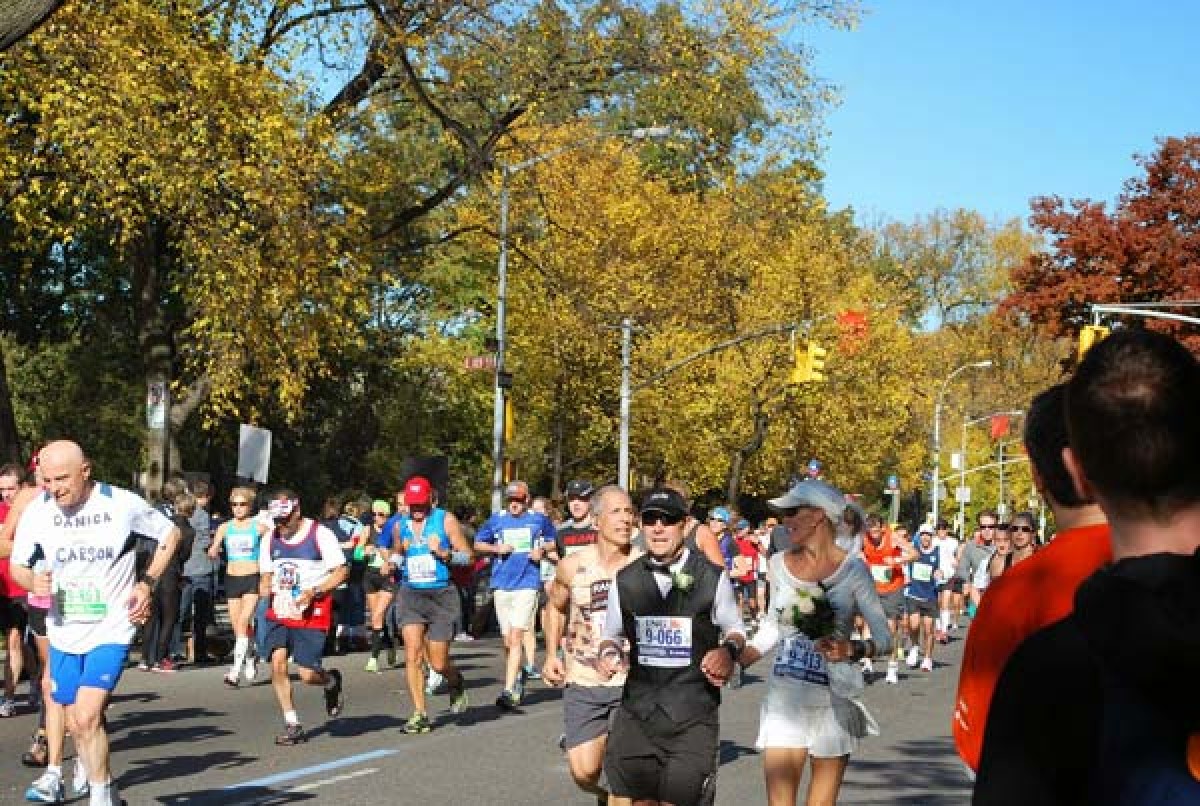
Date:
11/01/2026
Categories: Events

The New York City Marathon is one of the most significant and celebrated sporting events in the United States. Every year, tens of thousands of runners gather in the Big Apple to cover approximately 42 kilometers across the five boroughs of the city, while millions of spectators line the streets to cheer them on in a festive, electric atmosphere.
The TCS New York City Marathon is among the most prestigious and well-attended races in the world. In 2025, it set a new world record with 59,226 finishers.
Whether you are planning to run the race or simply attend as a spectator, this guide covers everything you need to know to make the most of the experience.
The New York City Marathon: Origins and What Makes It Unique
The first edition of the New York City Marathon was held in 1970. The race took place entirely within Central Park and attracted just 127 runners.In 1976, the course changed radically: the race expanded beyond the park and began crossing all five New York City boroughs, setting the template for major urban marathons that would follow around the world.
Today the TCS New York City Marathon is a truly international event — one that goes far beyond the definition of a sporting competition. Its 42.195 km course passes through Staten Island, Brooklyn, Queens, the Bronx, and Manhattan, giving every participant a completely different way to experience the city.
Spectators are equally central to the event: approximately 2 million people line the course, turning the streets of New York into a continuous celebration of music, energy, and encouragement.
A Marathon Across All Five Boroughs
One of the elements that makes this race truly unique is its relationship with the city it runs through. Participants don't just run a marathon — they experience a tour of New York, moving through neighborhoods that couldn't be more different from one another: from sweeping views of New York Harbor to the vibrant streets of Brooklyn, through Queens and on into Manhattan.Each borough has its own character, and the crowd accompanies runners for much of the way.
This is why the New York City Marathon course is such an integral part of the experience: the race lets you see a city you might otherwise explore as a tourist from an entirely new perspective.
.jpg)
How to Enter the New York City Marathon
Getting into the TCS New York City Marathon is not straightforward. Demand is intense, and securing a bib number requires choosing one of the entry pathways offered by NYRR, the organization that manages the race.For runners who want to participate, the main options are:
- the ballot (drawing);
- time qualification;
- entry through a charity partner;
- purchasing a package through an Official International Tour Operator.
The Ballot: When It Comes Down to Chance
The ballot, or drawing, is the best-known option for runners who want to attempt the TCS New York City Marathon without a guaranteed entry.The process is relatively simple: during a set application window established by NYRR, you submit your entry for a random draw.
The critical factor is the odds — which are extremely low. For 2026, out of more than 240,000 total applications, only around 1% of candidates received a spot through the drawing.
For this reason, if running New York is a firm goal, treating the ballot as your only option is not advisable.
Time Qualifier
Another pathway is to demonstrate that you have achieved a qualifying time standard in a previous race.Specifically, this requires completing a certified marathon within the designated time window and meeting the standard applicable to your age and gender category. Requirements are highly selective and must be verified against the official NYRR documentation for the edition you are targeting.
It is important to note that meeting the minimum time does not automatically guarantee a bib. In some categories, the number of spots may be limited, and where applications exceed availability, faster times take priority.
Charity Entry: Running for a Good Cause
Another route is to participate through one of the official charity partners of the marathon.This pathway offers a guaranteed entry in exchange for a commitment to raise funds for the chosen organization. NYRR maintains an official Charity Partner program dedicated to the marathon.
Before choosing this option, it is important to review the fundraising requirements and terms set by the specific charity.
Official Tour Operators
A practical and reliable option is to work with an Official International Tour Operator.This is a particularly convenient route, since most packages include not just the race entry but also hotel accommodation and flights to New York.
The cost is generally higher than simply entering the ballot, but the advantage is clear: race entry is guaranteed, and the logistics — from travel to accommodation — are handled for you.
The NYC Marathon Course: Start, Boroughs, and Finish
The New York City Marathon course passes through all five boroughs.The race starts on Staten Island at the Verrazzano-Narrows Bridge, and finishes in Central Park. Between these two points lies a varied and challenging route that crosses bridges, climbs hills, and stretches along long straightaways.
Staten Island to Brooklyn: Starting on the Verrazzano Bridge
The opening mile of the race is one of the most spectacular — and one of the most demanding. Runners begin on the Verrazzano-Narrows Bridge, which connects Staten Island to Brooklyn.The early excitement can be costly: the starting section involves a significant climb, and going out too fast here can burn through energy reserves that will be needed later.
The second mile partially compensates with a descent as the course moves toward Brooklyn.
Video - The Course in 5 Minuti
Brooklyn to Queens: The Heart of the Race
Brooklyn makes up a substantial portion of the course and offers some of the warmest crowd support of the day.Around the halfway point, the course crosses the Pulaski Bridge, which takes runners from Brooklyn into Queens. Spectators should note that the bridge is not accessible to the public during the race and should plan their movements accordingly.
The Queensboro Bridge: The Critical Stretch Around Mile 15
The Queensboro Bridge is one of the race's most iconic passages. On the bridge, crowd noise drops dramatically and runners find themselves in a completely different atmosphere — with the sound of footsteps and increasingly labored breathing as the main soundtrack.The entry into Manhattan comes shortly after mile 25 and marks a psychologically pivotal moment: from here, the race enters its decisive final phase.
The Bronx and Manhattan: The Final Miles to Central Park
After Manhattan, the course briefly enters the Bronx before looping back through Fifth Avenue.By this point fatigue is evident, but crowd support also reaches its peak. The final miles lead toward Central Park. The finish line is on the West Drive at 67th Street — for many runners, the culmination of months of preparation.
Where to Watch the NYC Marathon as a Spectator
One of the most common questions for anyone planning to follow the event is: how do you watch the New York City Marathon without missing the most exciting moments?The answer depends largely on how willing you are to move along the course. Trying to follow runners through every borough is practically impossible; a far more effective approach is to choose two or three strategic spots and reach them by subway.
First Avenue: The Most Energetic Crowd on the Course
One of the best vantage points on the race is First Avenue in Manhattan, particularly in the stretch between roughly 60th and 80th Street.Runners arrive here having just crossed the Queensboro Bridge and are met with an explosion of crowd energy. The presence of numerous bars and cafés in the area makes it a particularly enjoyable place to wait.
Manhattan: Why the Final Miles Are Worth It
For visitors to New York, Manhattan is probably the most practical area for following the race.The sections along First Avenue, East Harlem, and Fifth Avenue allow you to see runners at an advanced stage of the race while still being able to move relatively easily between vantage points.
Another particularly good spot is Fifth Avenue between 90th and 105th Street, where you can watch runners pass just before they enter Central Park.
Central Park: Experiencing the Marathon Finish
The Central Park finish is without doubt one of the most emotional moments of the day. Access to the final areas is regulated and may be limited by capacity, while some zones require specific tickets. Spectators can still watch runners approach the finish in the designated viewing areas.If you want to make the most of your time in the city, you can pair marathon day with a private Manhattan tour scheduled during another day of your stay.
Getting Around New York on Marathon Day
As you might expect, the marathon completely reshapes transportation across the city: many streets are closed to traffic and some crossings are restricted or unavailable.For spectators, the subway remains the most effective way to get around, but it is essential to check for service changes and plan routes in advance.
How to Follow the Race at Multiple Points
If you want to support a runner at more than one point along the course, choose spots connected by a single subway line and always allow plenty of time for travel between them.An effective strategy is to follow the runner in Manhattan — for example, first on First Avenue and then further along Fifth Avenue or near Central Park.
The Atmosphere of the NYC Marathon: What to Expect as a Spectator
The power of the marathon lies not just in the number of participants. It is above all in the atmosphere that takes over the streets. New York's crowds participate actively in the race, transforming the entire course into one long collective celebration. Marathon New York City by New York WelcomeThe Finish Line: The Most Moving Moment of the Day
After 42.195 kilometers, crossing the finish line is the culmination of months of training and preparation.Witnessing it can be a deeply affecting experience in its own right. At Central Park you will see elite runners, amateurs, people completing their first marathon, and athletes who ran the race in support of a charitable cause.
It is precisely this variety that makes the New York City Marathon something entirely different from an ordinary sporting event.
NYC Marathon: Dates, Weather, and Where to Stay
The TCS New York City Marathon traditionally takes place on the first Sunday of November — one of the most beautiful times of year to visit New York. Temperatures are generally cool, Central Park and the city's other green spaces begin to show their autumn colors, and the entire city prepares to welcome runners and spectators from around the world.Upcoming editions:
- 56th edition: November 1, 2026
- 57th edition: November 7, 2027
- 58th edition: November 5, 2028
- 59th edition: November 4, 2029
- 60th edition: November 3, 2030
What Is the Weather Like in New York During the Marathon?
November in New York is generally cool, with temperatures that can range roughly between 45°F and 61°F (7–16°C), though actual conditions can vary considerably.For runners, it is important to prepare for a potentially cold morning, particularly given that participants arrive at the starting areas well before the gun goes off.
Spectators should dress in layers: spending several hours outdoors means feeling the cold very differently from a normal sightseeing day.
Where to Stay During the NYC Marathon?
Hotel choice is especially important for runners. On race day, reaching the start area requires an early morning departure and travel times can be longer than usual. A well-connected location near the subway may prove more useful than proximity to any particular landmark.Spectators too will benefit from staying somewhere with easy access to the points along the course they plan to follow.
Demand for rooms during marathon week is very high: if you are planning the trip, booking your hotel at least six months in advance is strongly recommended.
Experiencing New York During Marathon Week
Whether you are a runner who has spent months training for this moment or a spectator looking to soak up the energy of the event, the New York City Marathon can become the thread that ties together a much richer trip.Marathon week means a particularly lively city — a chance to follow the race-week activities while also exploring attractions, neighborhoods, and local experiences.
For runners, the priority will naturally be arriving on race day rested and well-organized. For those accompanying a runner, the marathon can be just one of many highlights on the itinerary.
The real strength of the TCS New York City Marathon is this: it doesn't simply take place in New York — it involves New York. The streets, the neighborhoods, the bridges, and the crowd all become part of the race itself.
And that is why, for many participants and spectators, a Sunday in November can become one of the most vivid memories of any trip to the Big Apple.
If you are organizing your stay around the marathon, you can explore a personalized New York vacation package and build your itinerary around your race participation, the needs of those traveling with you, and the time you have in the city.
Frequently Asked Questions About the New York City Marathon
Before organizing your participation or planning your trip as a spectator, it is natural to have questions. Here are answers to the most common ones.
The TCS New York City Marathon is traditionally held on the first Sunday of November. The next edition is scheduled for November 1, 2026.
The 2025 edition set a new world record with 59,226 finishers. It is one of the most widely attended sporting events in the world.
There are four main pathways: the ballot (random drawing), time qualification, entry through an official charity partner, and purchasing a package through an Official International Tour Operator.
The odds are very low. For the 2026 edition, more than 240,000 applications were submitted and only around 1% of applicants received a spot through the drawing.
Yes. The alternatives to the ballot are time qualification, charity entry, and packages through Official International Tour Operators, all of which offer a guaranteed race entry.
The time limit to complete the race is 8 hours and 30 minutes.
The race starts on the Verrazzano-Narrows Bridge on Staten Island and crosses all five boroughs: Staten Island, Brooklyn, Queens, the Bronx, and Manhattan. The finish line is in Central Park on the West Drive at 67th Street.
Top viewing spots include First Avenue in Manhattan, Fifth Avenue between 90th and 105th Street, and the areas around Central Park. The subway is the most effective way to move between points along the course.
Demand for accommodation during marathon week is extremely high. Booking at least six months in advance is strongly recommended.
November temperatures typically range between 45°F and 61°F (7–16°C). Early morning hours can be particularly cold, both for runners waiting at the start and for spectators.
Traveling to New York? 3 Articles not to be missed
Read our Top-3 Articles to help you explore New York better.

Categories: What to see - Itineraries
Categories: What to know

Categories: What to know
A NYC Vacation during Marathon Weekend - How to plan it
If you have special request, or would like to inquire about a Hotel for your stay in New York.