
Whitney Museum of American Art: a practical guide to visiting
Hours - Tickets - Information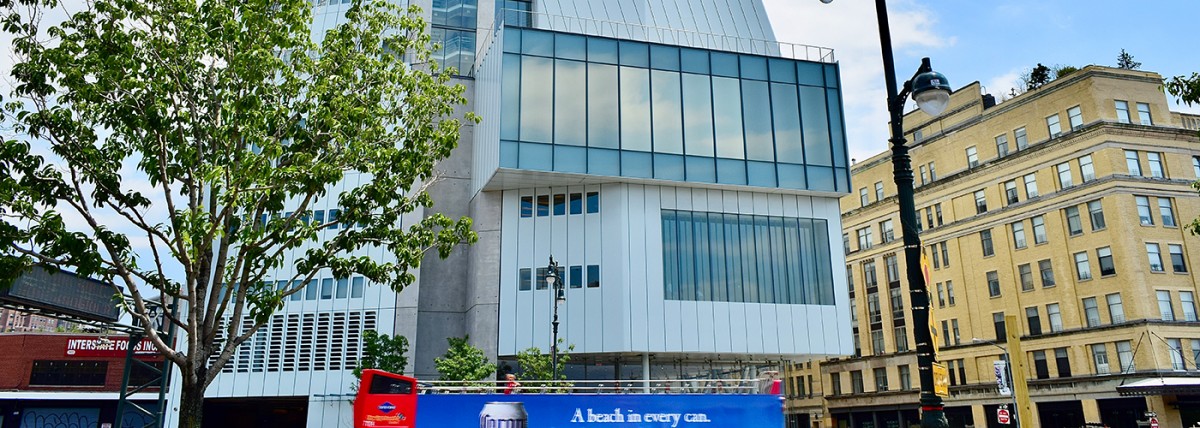
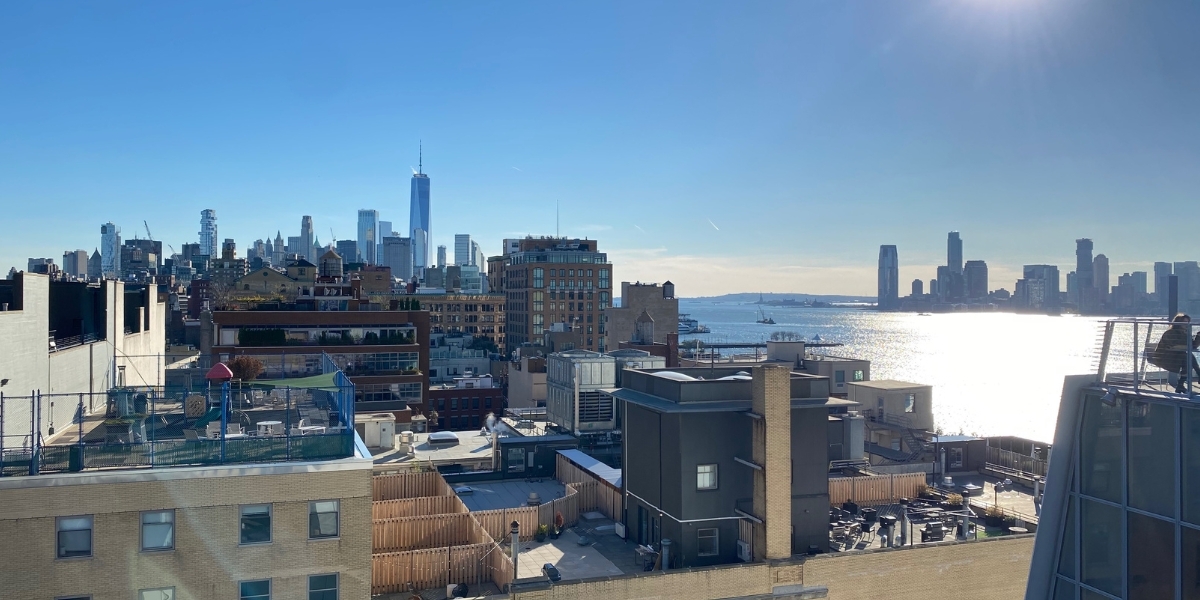

The Whitney Museum of American Art is one of New York City’s most important cultural institutions for travelers interested in exploring American art from the 20th century to today.
Founded with the specific mission of supporting and documenting the work of American artists, the Whitney stands out among New York museums thanks to its constantly evolving collection, its strong focus on contemporary voices, and its architecturally striking location designed in dialogue with the city.
Located in the Meatpacking District, just steps from the Hudson River and the High Line, the Whitney is an ideal stop on a cultural itinerary on Manhattan’s West Side, even for visitors who have already explored more traditional institutions such as MoMA or The Met.
The origins of one of New York’s most influential museums
The Whitney Museum of American Art was founded in 1930 by Gertrude Vanderbilt Whitney, a sculptor, collector, and philanthropist. In the early 20th century, many American artists struggled to find space in major museums, which largely favored European art. Whitney envisioned an institution dedicated exclusively to American artists, with a particular focus on living creators.
Even before the museum officially opened, Gertrude Vanderbilt Whitney supported New York’s artistic community through the Whitney Studio Club, an exhibition and meeting space for emerging artists and experimental practices. This initiative laid the groundwork for what would become one of the leading institutions for modern and contemporary American art.
The Whitney’s former locations
Over the decades, the Whitney has changed locations several times, reflecting both the city’s evolution and the museum’s growing needs. From 1966 to 2014, the museum was housed in the iconic Marcel Breuer–designed building on Madison Avenue, on the Upper East Side. Its bold Brutalist architecture marked a significant chapter in the museum’s history.
As the collection expanded and programming became more complex, the need for more flexible exhibition spaces led to the decision to relocate to a new building better suited to contemporary art.
The current building in the Meatpacking District
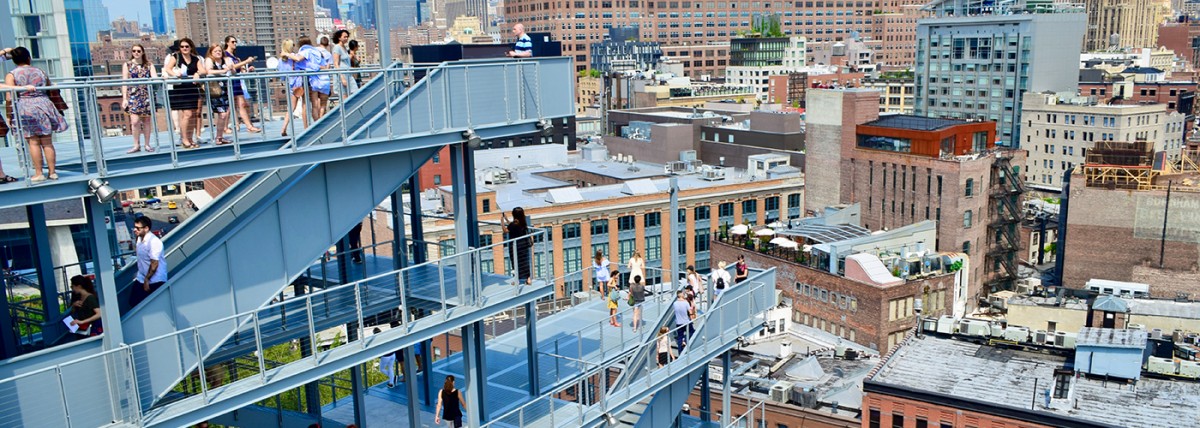
Since 2015, the Whitney has been located at 99 Gansevoort Street, in a building designed by Renzo Piano. The museum spans multiple levels, combining large indoor galleries with outdoor terraces overlooking the Hudson River.
The architecture emphasizes flexibility, allowing the museum to host large-scale installations, multimedia works, and rotating exhibitions. One of the most appreciated features is the strong connection between interior and exterior spaces: the terraces are an integral part of the visit, offering views of the river, the city skyline, and the High Line.
Photo Gallery - The Whitney Museum
The permanent collection: highlights and key artists
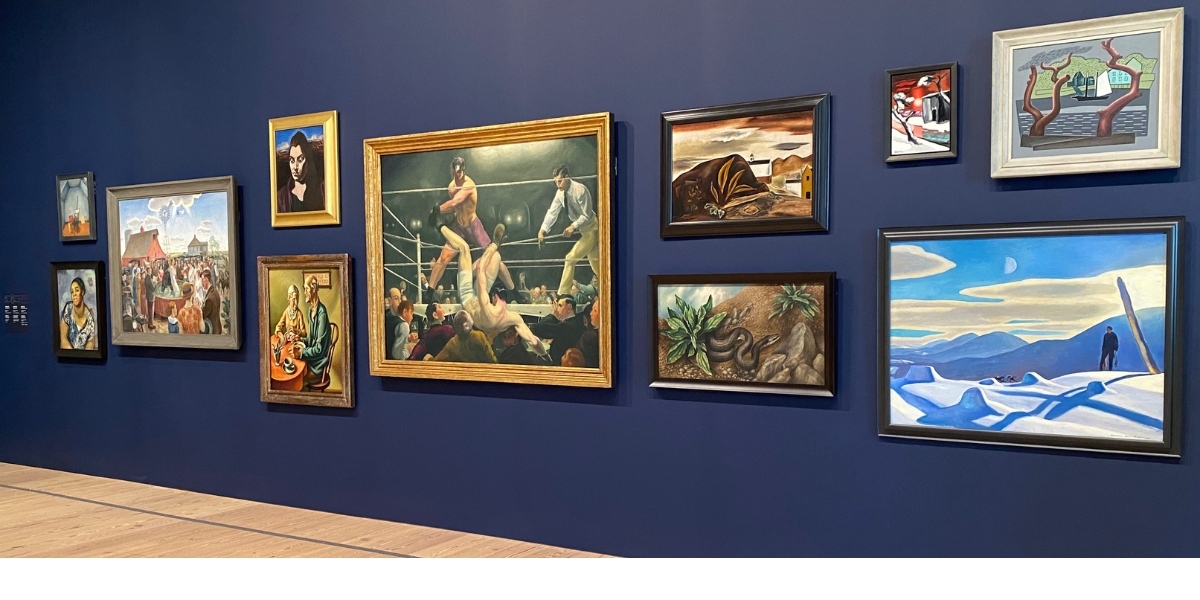
The Whitney’s permanent collection is dedicated exclusively to American art and includes more than 26,000 works, spanning from the late 19th century to the present day.
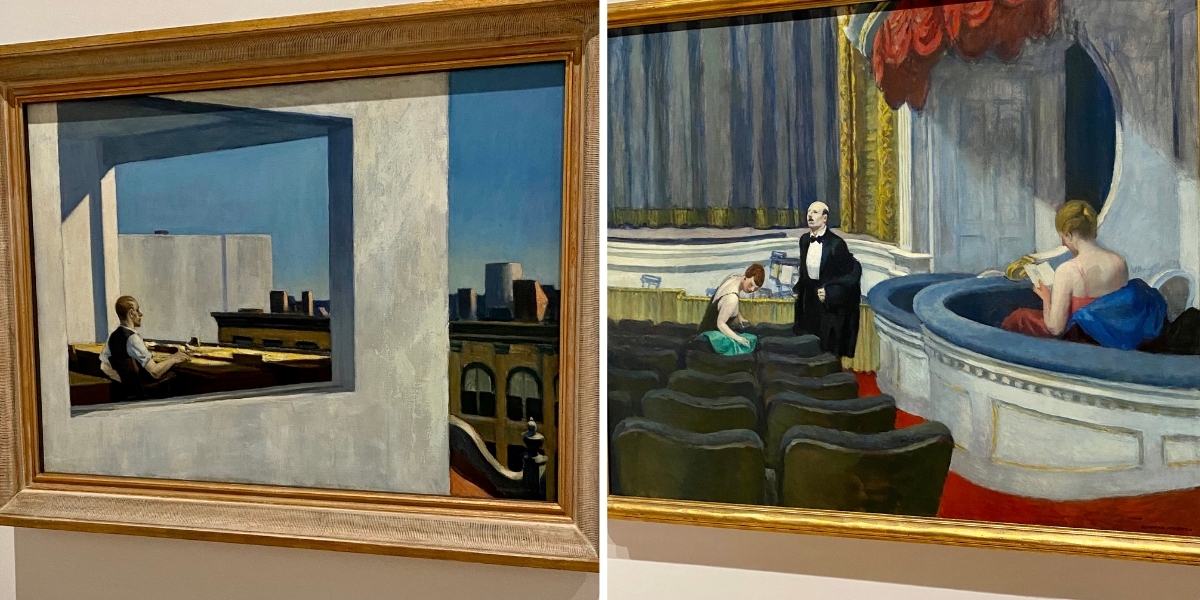
Among the most significant holdings are works by Edward Hopper, whose paintings and drawings capture American realism and the relationship between individuals and urban environments.
The collection also includes important works by Georgia O’Keeffe, documenting the rise of American modernism and the development of an independent artistic language distinct from European traditions.
Postwar American art is well represented, with works connected to Abstract Expressionism and subsequent movements. Artists such as Jackson Pollock, Mark Rothko, and Alexander Calder illustrate the evolution of painting and sculpture from the 1940s through the 1960s.
The collection continues with Pop Art, Minimalism, and conceptual practices, as well as photography, video, and new media. Displays rotate regularly and are organized around thematic or chronological narratives, making the Whitney one of the most dynamic and engaging museums in New York.
Temporary exhibitions
In addition to its permanent collection, the Whitney presents a robust schedule of temporary exhibitions focused on individual artists, movements, and critical themes in American art.
One notable example is the exhibition Sixties Surreal (2023), which explored the relationship between surrealism and American counterculture during the 1960s. The show examined how U.S. artists reinterpreted surrealist imagery through political, psychedelic, and experimental lenses, combining painting, sculpture, film, and archival materials.
The Whitney Biennial
One of the Whitney’s most significant contributions to contemporary art is the Whitney Biennial, first launched in 1932. It is the longest-running exhibition dedicated to contemporary American art and serves as a snapshot of the current artistic landscape in the United States.
Over the years, the Biennial has sparked debate and discussion by addressing timely social, cultural, and political issues. Visiting New York during a Biennial year offers one of the most meaningful museum experiences in the city.
Opening hours and admission
The Whitney Museum’s opening hours are:
- Monday: 10:30 am – 6:00 pm
- Tuesday: closed
- Wednesday: 10:30 am – 6:00 pm
- Thursday: 10:30 am – 6:00 pm
- Friday: 10:30 am – 10:00 pm
- Saturday: 10:30 am – 6:00 pm
- Sunday: 10:30 am – 6:00 pm
Visitors are encouraged to purchase tickets in advance and select a timed entry slot, as recommended by the official website, though tickets are also available on-site.
Admission prices are:
- Adults: $30
- Seniors and students: $24
- Visitors under 25: free admission, every day
Free admission is available:
- Friday evenings from 5:00 pm to 10:00 pm (reservation required)
- The second Sunday of each month (reservation required)
The ground floor is free to access daily and includes the lobby, museum shop, an exhibition space, and dining areas.
The museum offers several visitor services, including free Wi-Fi, a coat check, and restrooms on multiple floors. Photography is allowed for personal use only, without flash, tripods, or selfie sticks.
Among New York museums, the Whitney is also one of the most accessible, offering manual wheelchairs on a first-come, first-served basis.
For dining, visitors can enjoy the Frenchette Café and Bakery on the ground floor and the Studio Bar on the eighth floor.
Location and how to get there
The Whitney Museum of American Art is located at 99 Gansevoort Street, in the Meatpacking District. The closest subway station is 14 Street–8 Avenue, served by the A, C, E, and L lines.
The area is also easily accessible by bike and on foot, especially via the High Line or the Hudson River waterfront.
Things to See Nearby
Including the Whitney in a New York itinerary
Thanks to its location and collection, the Whitney pairs naturally with a walk along the High Line, a visit to Chelsea’s art galleries, or a day dedicated to contemporary art museums in New York.
A typical visit lasts between one and three hours, depending on interest in temporary exhibitions and available time.
For travelers interested in modern and contemporary American art, the Whitney is an essential stop and a perfect complement to the city’s more traditional museums. While it is easy to visit independently, joining a guided tour in New York can enhance the experience by providing expert insight and context.
Searching Availability...
Visit the official website for updated info including FUTURE EXHIBITIONS
PASSES THAT INCLUDE ADMISSION TO THE WHITNEY
.jpg)

- Private Walking Tours™
- Private Bespoke Experiences™
- NYC Vacation Packages™
- Corporate & VIP™
- Escorted Coach Tours
- Cruises & Helicopters
- Museum Tickets + NYC Passes
- Broadway Shows
- NYC by Night: Cruises & Activities
- NYC by Holidays: Cruises & Activities
- Restaurants
- Day Trips & Extended Tours
- Guided City Tours
- Bike Tours




.jpg)






 be free!




Unforgettable holiday in New York, fantastic tour operator Irene, who introduced us to the city in all its beauty by telling us the story and describing passionately the life of the place. [...] Irene, I was able to see a Yankees tie as a fan, a dream of mine in the drawer..thanks for your help. Top. Thanks.
From TripAdvisor - May 2025

During my recent trip to New York, I had the pleasure of meeting Irene who accompanied us on a tour of the city, and the experience was unforgettable. From the first moment, she was welcoming, knowledgeable and incredibly passionate [...]
From Google - Feb 2025
We relied on them to organize a group tour in New York. Professional, precise, helpful, friendly. We can only thank Mr. Tony, who followed us impeccably in the planning, and his daughter Irene, an extraordinary guide, who showed us New York in a way that we will not forget. [...]
From Google - November 2024

I am the owner of a Travel Agency. We are Italian in Erba, Eolo travel, I brought a small group and I entrusted myself to Tony. We received great service from start to finish. Punctuality and excellent guides.Thank you for the wonderful experience!!!
From Google - May 2024

Irene? as I have already said elsewhere, she truly deserves all the compliments that are paid to her. Available, friendly, prepared, in short, if you need an Italian speaking guide in New York, she is the right person. You deserve 5 stars and more!
From TripAdvisor - April 2024

An extraordinary experience: I had the pleasure of having Irene as my guide for two days and thanks to the passion she puts into guiding you through the streets of NYC, the anecdotes, the trivia she lets you discover, and the facets she shows during the tour you can't help but fall even more in love with this wonderful city.
From Google - February 2024

Excellent guide, excellent organisation, Irene always ready to respond, available in every topic with competence, you can feel the passion for her work. Her voice accompanied our tour, we will miss you!
From Google - January 2024

[...] unique, very professional, courteous, friendly we can only write positive adjectives, you made us feel at home and have the desire to return. Super recommended. Erica, Marco, Annalisa and Giuseppe.
From Google - December 2023

We did 2 tours together with our guide Irene in one day, Hoboken and the East side. What can I say, in addition to the wonderful places, she has made everything more magical [...]
From Google - January 2023

Irene was a FANTASTIC tour guide! She was so knowledgeable about the area and was so patient with all our questions. We stopped to use the bathroom and we got coffee halfway through, she was so kind! It was a pleasure learning about Brooklyn from you!
From TripAdvisor - April 2022

I’m the biggest fan of Fall activities, but haven’t had a chance to do anything beyond Apple Picking in NJ. I decided to take a last minute 2 day trip with a friend in Hudson Valley, but didn’t know where to start [...] Thankfully I was able to use New York Welcome to do the hard work for us [...]
From TripAdvisor - October 2021
- New York City Travel Guide
- How Much Does New York Cost?
- Best Rooftop Bars in NYC 2025: Where to Drink with a View in New York
- Time Zone and Jet Leg
- Accommodations: Choose Where to Stay
- New York City Public Transportation
- Weather: Fall in New York
- Weather: Winter in New York
- Weather: Spring in New York
- Weather: Summer in New York
- 101+ Excursions in New York City
- Grand Central Terminal
- Covid-19 Updates
- Niagara Falls Day Trip by Airplane™
- Washington DC - Visit the Capital
- Niagara Falls & Toronto & 1000-Islands
- American Triangle: 5-Day Excursion
- American Getaway: 4-Day Excursion
- Discover Boston in 1 Day
- 1-Day: The Hamptons & The Beaches
- How to Visit Niagara Falls From NYC
- NYC & Orlando Travel Package™
- NYC & Chicago Travel Package™
- Pre- or Post-Cruise Escapes™




 Loading...